
Leadership Retreat Agenda Architecture: A Chief of Staff's Guide (Decisions, Not Vibes)
A leadership retreat agenda should start with a list of three to five decisions the team must leave with, not a list of sessions. Work backwards from there: decisions → pre-reads → sessions → capture → 30-day follow-up. Every block on the agenda either moves a decision forward, builds the alignment or trust a decision needs, or gives people the rest they need to think clearly. Anything else is a nice afternoon. You probably know the failure mode: a beautiful venue, a memorable dinner, and two weeks later nobody can say what was decided. The CEO is drained, and the hardest topic slid to "next quarter" again.
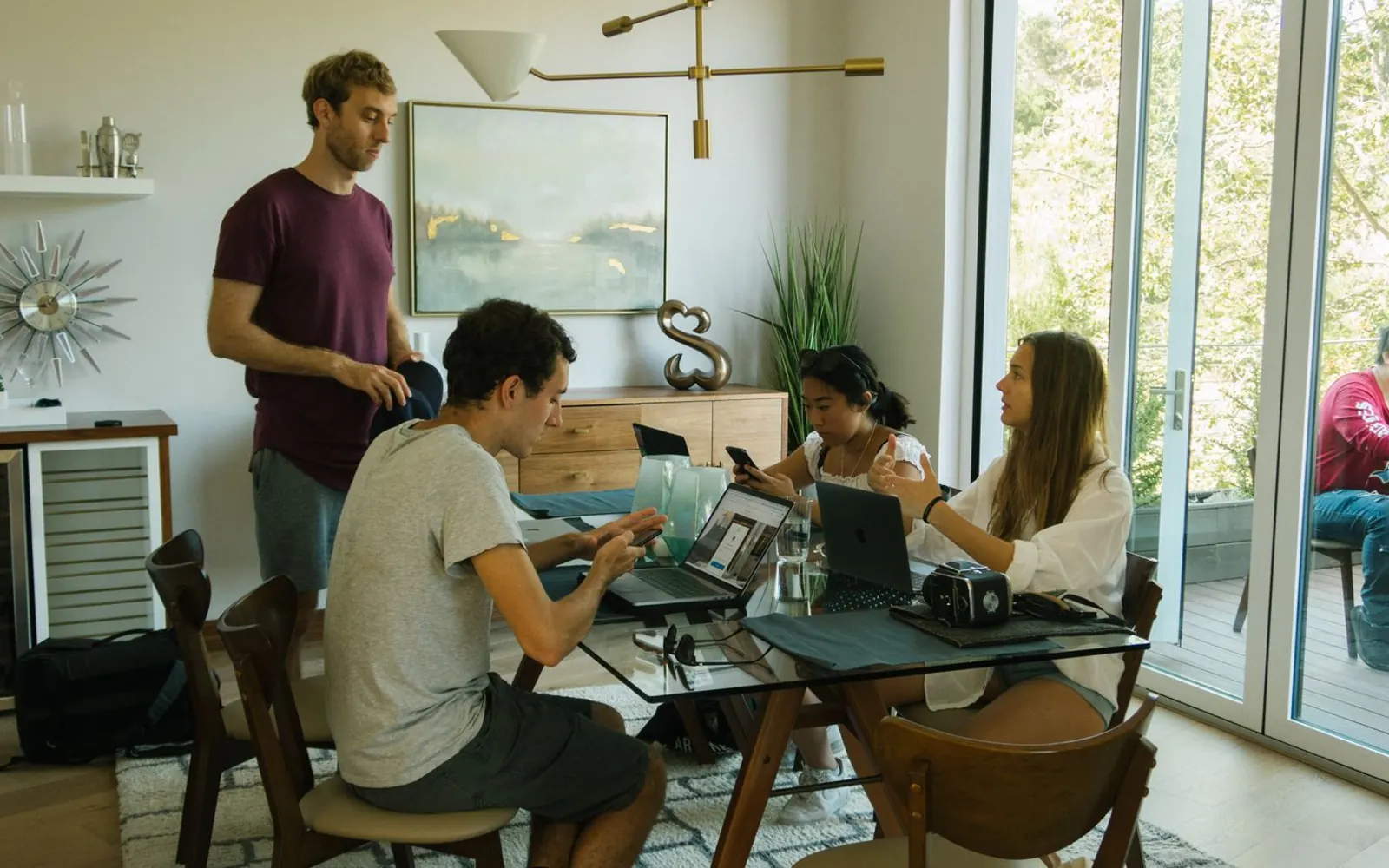
A leadership retreat agenda should start with a list of three to five decisions the team must leave with, not a list of sessions. Work backwards from there: decisions → pre-reads → sessions → capture → 30-day follow-up. Every block on the agenda either moves a decision forward, builds the alignment or trust a decision needs, or gives people the rest they need to think clearly. Anything else is a nice afternoon.
You probably know the failure mode: a beautiful venue, a memorable dinner, and two weeks later nobody can say what was decided. The CEO is drained, and the hardest topic slid to "next quarter" again.
This guide is the agenda architecture that prevents that. It is written for chiefs of staff who own the content of a leadership offsite, with notes for the EA running logistics and the CEO who will chair it.
Start from the decisions
Before you book a room or pick a facilitator, sit down with the CEO and write the decision list. Keep it to three to five items. Fewer and the retreat may not justify the travel. More and nothing gets the time it needs.
For each decision, capture four things:
Decision | Owner going in | What "decided" means | Pre-read needed
Example: Which two priorities we fund next year | CEO | Two priorities named, a budget envelope agreed, one exec owner each | One-page options memo with trade-offs
Example: Whether we restructure the go-to-market team | CRO | Yes/no, with a rollout owner and a date to announce | Current org chart, two options, risks
Example: Our operating cadence for next year | Chief of staff | Meeting rhythm and decision rights agreed and written down | Draft cadence doc
The third column matters most. "Decided" should be specific enough that two people in the room would describe the outcome the same way afterwards. "Align on strategy" is not a decision. "Choose between option A and option B, and name who leads it" is.
Also write down what is not on the table. A short "out of scope" list stops the agenda drifting into topics that belong in a regular staff meeting, and it gives you a polite way to redirect when it happens.
Board vs leadership vs mixed: who attends changes everything
The guest list is an agenda decision, not just a logistics one. It changes how candid people can be, what format works and what kind of venue you need.
- Leadership team only. The most common format for strategy offsites. You can be candid, run working sessions and mix in connection time. Privacy matters, but mostly to keep sensitive topics out of earshot of other guests.
- Board or board-and-leadership. More formal, more scripted, often shorter. Materials are confidential, votes or approvals may happen, and some directors join remotely. Privacy and AV become hard requirements, not preferences. See board meetings for how these days usually run.
- Mixed (leadership plus next layer or advisors). Useful for rollout and buy-in, weaker for the hardest decisions. A common pattern is a leadership-only first half for decisions, then a wider group joins for the "how" sessions.
With a mixed group, make the line explicit on the agenda. People handle being out of a session far better when they knew in advance.
The agenda skeleton
Every session on a leadership retreat is one of four types. Labelling them on the agenda makes it obvious when you have too much of one and not enough of another.
- Decision: a named decision from your list, with a pre-read, a facilitator and a clear output.
- Alignment: shared context the decisions depend on, such as a market review or a look at last year's results.
- Connection: time that builds the trust hard conversations need, such as a long dinner, a walk or a structured "how we work together" session.
- Rest: real breaks, not a phone-check between sessions. Tired leaders decide badly.
Here is a skeleton for a one-night, two-day retreat. Treat it as a starting point, and cut day 2 if your decision list is short.
Day-part | Session type | Pre-read | Facilitator | Output
Day 1 morning: arrival and opening | Alignment | Retreat purpose and decision list | CEO | Agreed agenda, ground rules, out-of-scope list
Day 1 late morning | Alignment | Context memo (market, results, constraints) | Exec owner | Shared facts; open questions sent to the parking lot
Day 1 lunch and walk | Rest / Connection | None | None | Energy back up before the hard session
Day 1 afternoon | Decision (hardest one first) | Options memo | Chief of staff or external facilitator | Decision logged, owner named
Day 1 late afternoon | Decision | Options memo | Exec owner with a neutral co-facilitator | Decision logged, or a dated next step
Day 1 dinner | Connection | None | None | Candid conversation, no slides
Day 2 morning | Decision | Options memo | Facilitator | Decision logged, owner named
Day 2 late morning | Decision / Alignment | Draft plan from day 1 decisions | Chief of staff | Owners, dates and first milestones agreed
Day 2 close | Alignment | Draft decision log | CEO | Read-back of every decision; agreed internal message
A few principles sit behind the shape:
- Put the hardest decision on day 1 afternoon. People are fresh, context is loaded, and there is still a dinner and a morning to recover if it gets tense.
- End with a read-back, not a speech. Reading each decision and owner aloud catches misunderstandings while everyone is still in the room.
For a single-day retreat, keep the same order and compress: opening and context in the morning, two decision sessions either side of lunch, and a read-back before people leave.
Pre-reads and timeboxing
Pre-reads are where decisions get made faster. If the room spends the first hour learning the facts, there is no hour left to decide.
Pre-read rules that work:
- One page per decision, two at most. Options, trade-offs, a recommendation and what the owner needs from the room.
- Send them early enough to be read. Several working days ahead is a sensible rule of thumb, and earlier for board members.
- Name a pre-read owner for each decision, and make the chief of staff the editor, so every memo has the same shape.
- Assume people have read it. Open each decision session with questions, not a re-presentation.
- Keep confidential pre-reads confidential: secure sharing, generic file names, no printed copies left in shared spaces.
Timeboxing. Give each session a fixed length and a named timekeeper (not the CEO). As a rule of thumb, a single decision session works best somewhere between 60 and 120 minutes, with a clear split between discussion and the decision itself. If a topic runs over, the timekeeper offers two choices: extend by a fixed amount and cut something else, or log a dated next step and move on.
Parking-lot capture. Keep a visible parking lot (a flip chart or a shared doc) for good topics that are not on the agenda. Assign one person to capture each item with a one-line description. At the close, every item gets one of three outcomes: an owner and a date, a slot in a regular meeting, or a deliberate "drop." A parking lot that never gets reviewed teaches people their concerns disappear.
Breakouts and plenary
Breakouts are useful when a question has several parts that can be worked in parallel, or when a quieter group needs a smaller room to speak up. They are less useful for the final call on a decision, which belongs in the full group.
Split into breakouts when:
- You need options developed in parallel, such as three teams sketching three versions of next year's plan.
- The group is large enough that not everyone will talk in plenary.
- You want cross-functional pairs working on how a decision will roll out.
Stay in plenary when the decision affects everyone, when trust is low, or when the CEO needs to hear the full debate.
Room needs follow capacity, and capacity is three numbers. Before you lock the agenda, check that the venue can support the format you have designed:
- Sleeping: private bedrooms, one person per bedroom. Leadership groups usually expect single occupancy with a real door, so count bedrooms from the floor plan, not the headline "sleeps" number.
- Working: seats in the main plenary room, plus enough separate breakout rooms (with doors) for the splits on your agenda.
- Dining: seats at one sitting, ideally at one table, since the dinner is a connection session.
Your comfortable group size is the lowest of the three. If the house sleeps 14 but the great room seats 10 around a table, the agenda breaks before the bedrooms do. Ask the venue directly: what is the maximum for sleeping, for working and for eating together, and if we grow, what breaks first?
Privacy, venue and AV
A leadership retreat needs people to speak freely. That depends on the venue more than most agendas admit.
Privacy: a soft room block is not an exclusive buyout.
- A soft room block (or best-effort hold) reserves some rooms for your group while other guests can still stay on the property and use shared spaces.
- A minimum room commitment guarantees a number of rooms, often to keep a meeting space, but the rest of the property can still be sold.
- A full-house exclusive buyout means no other guests on site for your dates.
For confidential sessions, ask in writing: can other guests be on the property during our dates? Which shared spaces (breakfast room, lobby, bar, spa, terrace) stay public? Is the meeting room a real room with walls and a door, or a space divided by an air wall? If the answers do not match the sensitivity of your agenda, change the venue, not the description.
AV and WiFi for board materials and hybrid participants. Confirm before you sign:
- Dedicated or shared bandwidth, with stated upload and download speeds.
- A live speed test in the meeting room with other devices connected, at the time of day you will present.
- Wired Ethernet for the presenter where possible, a screen and a tested HDMI path, plus spare adapters.
- A camera and room microphones if anyone joins remotely, and a quick test with a remote participant beforehand.
- A backup connection, enough power outlets for every laptop, and a named person who can reset the router on a Saturday morning.
Treat these as questions to ask rather than defaults, and get the answers in writing.
Capture and the 30-day follow-up
The agenda is only as good as what survives the drive home. Plan capture as carefully as the sessions.
During the retreat:
- Name one scribe per decision session who is not the facilitator or the decision owner.
- Log decisions in the room, in a shared doc everyone can see, using the decision log below.
- Photograph whiteboards before anyone wipes them.
Decision log template:
Decision | Owner | Due date | Status | Where tracked | Communicated to
What was decided, in one sentence | One named person | A real date | Not started / In progress / Done | Tool or meeting where it lives | Who needs to hear, and by when
The 30-day follow-up:
- Within two days: the chief of staff circulates the cleaned-up decision log and asks each owner to confirm their line and date.
- Within a week: the agreed internal message goes out, so the wider company hears decisions from leadership rather than rumor.
- At 30 days: a short check-in in the regular leadership meeting reviews every line on the log. Anything stalled gets a new date or an honest "we changed our mind."
- At 60 and 90 days: repeat the review, and use the result to brief next year's retreat.
For the full post-event playbook, including pulse surveys and an actuals-vs-budget view, see After the Company Offsite: Debrief, ROI Story and Next Year's Brief — /guides/after-the-company-offsite-debrief.
Where a local event designer fits
The chief of staff's leverage is the agenda: the decision list, the pre-reads, the facilitation plan and the follow-up. The hours that get eaten are usually elsewhere: confirming whether a buyout is really a buyout, counting private bedrooms, testing WiFi, finding breakout rooms with doors, arranging a private dinner and getting everyone there.
That is the work of a local event designer who knows the destination. At Vantly, local event designers shape a tailor-made leadership retreat around your agenda, privacy needs and group size, so you can stay focused on the content. One point of contact and one invoice is how we aim to work. Our sample events include same-day boardroom and one-night board and leadership examples. Treat them as starting points a designer tailors to your team, not fixed packages.
When you are ready to see real numbers for your dates and group, get a custom quote.
FAQ
What should a leadership retreat agenda include?
A leadership retreat agenda should include the three to five decisions the team must make, a pre-read for each, session blocks labelled decision, alignment, connection or rest, a named facilitator and output for each block, a parking lot, and a closing read-back of every decision with its owner and due date.
How long should a leadership offsite be?
Let the decision list set the length. One or two decisions usually fit a single focused day. Three to five decisions, or a team that needs time to build trust, usually justify one night and two days, so the hardest conversation can happen after a dinner together rather than at the end of a long day.
How do you make sure an offsite ends with decisions?
Write the decision list before booking anything, define what "decided" means for each item, and send one-page pre-reads in advance. In the room, timebox each decision session, log outcomes live with a single owner and date, and close with a read-back so every decision is confirmed before people leave.
What pre-reads should go out before a leadership retreat?
Send one short memo per decision, ideally a page and no more than two, covering the options, trade-offs, a recommendation and what the owner needs from the room. Add a one-page retreat purpose and agenda. Send them several working days ahead, use secure sharing, and assume everyone has read them.
How do you run a parking lot at an offsite?
Keep a visible list for valuable topics that are off-agenda, with one person capturing each item in a single line. Review it at the close of the retreat and give every item an outcome: an owner and a date, a slot in a regular meeting, or a deliberate decision to drop it.
What follow-up should happen after a leadership retreat?
Circulate the decision log within two days and have each owner confirm their line. Send the agreed internal message within a week. Review every decision at a 30-day check-in, then again at 60 and 90 days, giving stalled items a new date or an honest change of plan.
Related guides
- Leadership retreats
- Board meetings
- Retreat planning for chiefs of staff
- After the Company Offsite: Debrief, ROI Story and Next Year's Brief — /guides/after-the-company-offsite-debrief
- How EAs Run Board and Leadership Meeting Days That Feel Calm — /guides/board-meeting-planning-for-executive-assistants
- How to build a leadership retreat budget your finance partner will approve — /guides/leadership-retreat-budget
- How to actually check a venue’s WiFi before your offsite — /guides/how-to-check-venue-wifi-for-corporate-offsites
- All Vantly guides
Sources
These public community threads informed the questions this guide answers. They are cited by URL only and not quoted.
- r/ExecutiveAssistants thread on where EAs send their execs for offsites: https://www.reddit.com/r/ExecutiveAssistants/comments/1vqzj1e/where_are_you_all_sending_your_execs_for_offsites/
- r/ExecutiveAssistants thread on bonding activities for management offsites: https://www.reddit.com/r/ExecutiveAssistants/comments/1b6jcgn/offsiteonsite_bonding_activities_for_management/
- r/ExecutiveAssistants thread on planning retreats: https://www.reddit.com/r/ExecutiveAssistants/comments/1917r3a/planning_retreats/
- Vantly Event planner ops checks (internal, 6 Oct 2026): private bedrooms, buyout vs room block, WiFi/AV, capacity.