
Sales team building activities that fit inside a sales kickoff
The best sales team building activities double as practice: objection-handling rounds, discovery drills, deal-review clinics and handoff relays, with recognition that celebrates teams, not just the top rep. Map each one to a slot in the agenda.
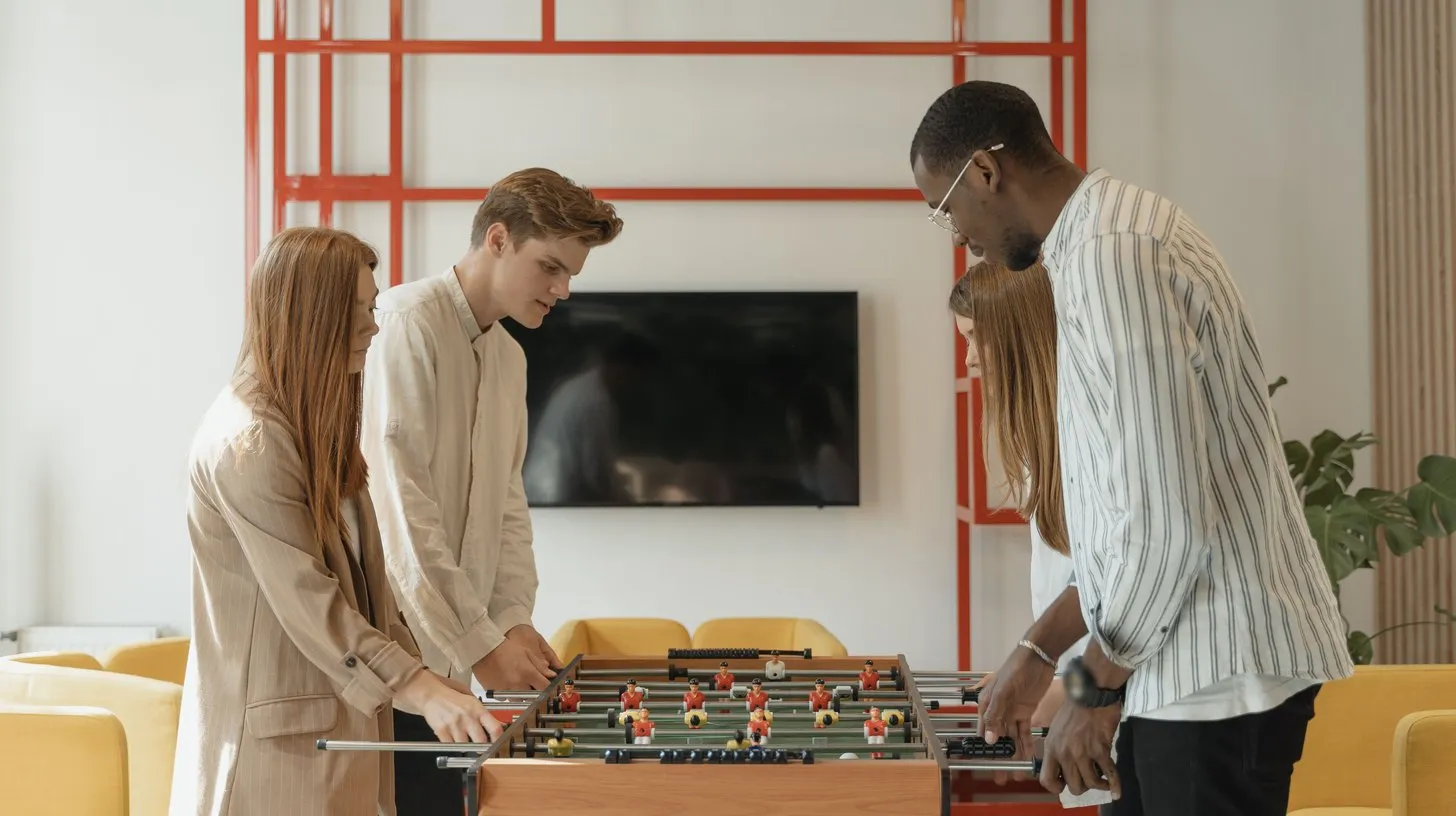
Sales teams do not need more generic team building. Time at a kickoff is precious, and reps notice when an activity has nothing to do with selling. The sales team building activities below are built to double as practice: they strengthen the team and the skills at the same time, and each one is mapped to a slot in the agenda of a sales kickoff. If you are planning for non-sales teams, see our guide to team building activities for work instead.
To go straight to the list, jump to the activity picker. Adapt every activity to your sales motion, your products and the mix of roles in the room.
The sales team building activity picker
The picker maps each activity to the skill it practices and the agenda slot it fits. Group size, time and room needs are described in planning terms rather than exact numbers, and they reflect enablement and local planner practice, not a benchmark. Every activity has an opt-out or adaptation so nobody is forced into something that does not suit them. Copy it and mark the ones that fit your agenda.
| Activity | Skill practiced | Agenda slot | Group size | Time | Room needs | Opt-out or adaptation |
|---|---|---|---|---|---|---|
| Customer-story pairs | Discovery | Opener | Pairs | Short | Main room | Share a team story instead of a personal one |
| Win-loss in one sentence | Deal review | Opener | Tables | Short | Main room | Pass, or write it on a card |
| Value statement round | Product | After a plenary | Tables | Short | Main room | Read a prepared statement |
| Objection-handling rounds | Objection handling | Practice block | Trios | Medium | Breakout rooms | Observe and score instead of playing a role |
| Discovery drill | Discovery | Practice block | Trios | Medium | Breakout rooms | Observer role |
| Deal-review clinic | Deal review | Practice block | Small teams | Long | Breakout rooms | Bring an anonymized or past deal |
| Negotiation simulation | Negotiation | Practice block | Pairs or small teams | Long | Breakout rooms | Coach role instead of negotiator |
| New-product pitch practice | Product | After a plenary | Small teams | Medium | Breakout rooms | Team pitch, one spokesperson |
| Competitive positioning sprint | Product, objection handling | Practice block | Small teams | Medium | Breakout rooms with whiteboards | Research role |
| Manager coaching circles | Deal review | Practice block | Small groups with a manager | Medium | Quiet breakout rooms | Written feedback only |
| Handoff relay | Handoff | Practice block | Cross-role teams | Medium | Breakout rooms | Observer role |
| Account-plan sprint | Handoff, deal review | Practice block | Cross-role teams | Long | Breakout rooms with whiteboards | Research or note-taking role |
| Partner joint-pitch practice | Handoff, product | Practice block | Mixed teams with partners | Medium | Breakout rooms, kept apart from internal sessions | Observer role |
| Customer panel debrief | Discovery | After a plenary | Tables | Medium | Main room | Listen-only option |
| Objection bingo | Objection handling | After a plenary | Whole room in teams | Short | Main room | Play as a team |
| Pitch relay | Product | Practice block | Teams | Medium | Main room or large breakout | Supporting role |
| Team deal trivia | Product, deal review | Evening | Teams | Medium | Event space | Join a team as scorekeeper |
| Discovery questions challenge | Discovery | Practice block | Teams | Short | Breakout rooms | Team submission only |
| Peer recognition wall | Handoff | Close | Whole room | Short | Freestanding boards, since many venues do not allow anything on their walls | Anonymous notes allowed |
| Commitments circle | Deal review | Close | Teams | Short | Main room or breakouts | Written commitment instead of saying it aloud |
For how these slots fit into the full agenda, see our guide to agenda architecture for sales leaders. For kickoff themes and wider event ideas, see our guide to sales kickoff ideas.
Sales kickoff icebreakers for the first hour
Sales kickoff icebreakers should warm the room up and point it toward selling, without asking anyone for personal disclosure. Five openers for the first hour:
- Customer-story pairs. Each person shares a short story about a customer they helped. Partners pick one detail to share with the table.
- Win-loss in one sentence. Each person names one deal they won or lost last year and the single reason why.
- The question that changed a deal. Each person shares one discovery question that opened up a conversation.
- Value statement round. Each table agrees on one sentence describing the value of a product to a specific customer type.
- Objection warm-up. Tables list the objections they heard most last quarter, ready for the practice block later.
Practice-based activities: objection handling, discovery and deal reviews
These are the core of a practice-based kickoff. Each one needs a clear setup, a facilitator or manager per group and a short debrief.
- Objection-handling rounds. Setup: trios with a rep, a buyer and an observer, and a stack of real objections. Debrief: the observer shares what worked and one thing to try next round.
- Discovery drill. Setup: a short customer brief and a timer. The rep asks questions; the buyer answers only what is asked. Debrief: which questions uncovered the real need.
- Deal-review clinic. Setup: small teams bring a live or recent deal, anonymized if needed. Debrief: the team agrees on the next step and the risk to watch.
- Negotiation simulation. Setup: a scenario with clear constraints for each side. Debrief: what each side gave up, and what they protected.
- New-product pitch practice. Setup: teams build a short pitch for one product and one customer type. Debrief: the room votes on clarity, not polish.
- Competitive positioning sprint. Setup: each team takes one competitor and builds a response to its strongest claim. Debrief: share the best responses with the whole room.
- Manager coaching circles. Setup: a manager and a few reps work through one real situation each. Debrief: each rep leaves with one action.
Sales kickoff games and friendly competitions
Sales kickoff games can bring energy to the room, but only if they are fair. Formats that keep competition healthy:
- Objection bingo. Teams mark off objections as they hear them handled well during a session.
- Pitch relay. Teams pass a pitch from person to person, each adding one section.
- Team deal trivia. Questions about products, customers and last year's wins, answered in mixed teams.
- Discovery questions challenge. Teams submit the best discovery questions for a scenario; a panel picks the strongest.
- Account-plan race. Teams build the best plan for a sample account, judged on quality rather than speed.
Fairness rules for every game: play in teams, not as individuals; mix tenure so new hires and veterans are on the same side; offer several ways to win, such as best idea, best teamwork and most improved; and never post a public leaderboard that ranks individual people.
Cross-team activities: SDR, AE, CS and partners
Some of the most useful practice happens across roles. SDRs, account executives and customer success managers see the same customer at different moments, and their handoffs are where deals can stall or customers can lose trust.
- Handoff relay. A cross-role team takes one customer from first contact to renewal, with each role handing the account to the next. Debrief: what information got lost at each handoff.
- Account-plan sprint. A cross-role team builds a plan for one real or sample account, from expansion opportunities to risks.
- Partner joint-pitch practice. Where partners attend, mixed teams practice a joint pitch, in a room kept separate from internal-only sessions.
Recognition that doesn't embarrass anyone
Recognition at a kickoff should lift people up without putting anyone on the spot. Celebrate teams as well as individuals, recognize effort and improvement alongside results, and let people choose whether to speak on stage. Peer recognition, such as a wall where colleagues leave short notes of thanks, reaches people who will not top a leaderboard. For the awards night itself, see the awards section of our production checklist for field marketing. For programming that avoids forced fun, see our guide to an inclusive retreat for People Ops.
When a local planner helps
Practice-based activities depend on the room: enough breakout rooms at the same time, quiet space for coaching and an event space for the evening. Booking those separately from the venue, the caterer and any hosted activity providers adds contracts and invoices. The alternative is one local planner, one fee.
A Vantly local planner books the rooms the activities need, including enough breakouts and quiet practice space, and any hosted formats, all in one priced proposal. Your enablement team keeps the content; the local planner handles the space and logistics around it. Browse local planners to see who works in your area, or see sample events as examples a local planner tailors.
Frequently asked questions
What are good team building activities for sales teams?
The ones that double as practice: objection-handling rounds, discovery drills, deal-review clinics and handoff relays between SDRs, account executives and customer success. They build the team and the skills at the same time. The activity picker maps each one to a skill, an agenda slot and the room it needs.
What games work at a sales kickoff?
Team-based sales kickoff games tied to selling skills fit best: objection bingo, pitch relays, team deal trivia and a discovery questions challenge. Play in mixed-tenure teams, offer several ways to win and avoid public leaderboards that rank individuals, so the games stay fun and fair for everyone in the room.
What are good icebreakers for a sales kickoff?
Short, work-based openers such as customer-story pairs, "win-loss in one sentence" and sharing the discovery question that changed a deal. They warm up the room and point it toward selling without asking anyone for personal disclosure. Keep them short so the first hour still leaves room for the plenary.
How do you make sales competitions fair?
Compete in teams rather than as individuals, mix new hires with veterans, and offer several ways to win, such as best idea, teamwork and most improved. Recognize effort alongside results, let people opt into stage moments and never post a public leaderboard that ranks people one by one.
How do you mix SDRs, AEs and customer success in activities?
Build cross-role teams around a shared customer. A handoff relay takes one account from first contact to renewal, and an account-plan sprint has each role contribute what it knows. Debrief on where information gets lost between roles, and turn the answers into agreed handoff rules.