
Corporate retreats: how to plan one that's worth the trip
Someone in the leadership meeting says, "Let's do a retreat this year," and by the afternoon it has landed on your desk. A corporate retreat is time away from the office, generally one to three days, built around one business outcome the team can't reach in a normal week. The way to plan one well is to make four decisions in order: the goal, the format, the place, and who builds it with you. Settle them in that order and most of the later choices, from the agenda to the budget, become much easier to make. This page walks through each of those decisions for a US team, with real near-New York options and honest travel times from Manhattan. At Vantly, every retreat is designed to order by a local event designer who knows the destination. The sample events we link to are examples of what a designer can build, not fixed packages.
What a corporate retreat is (and how it differs from an offsite)
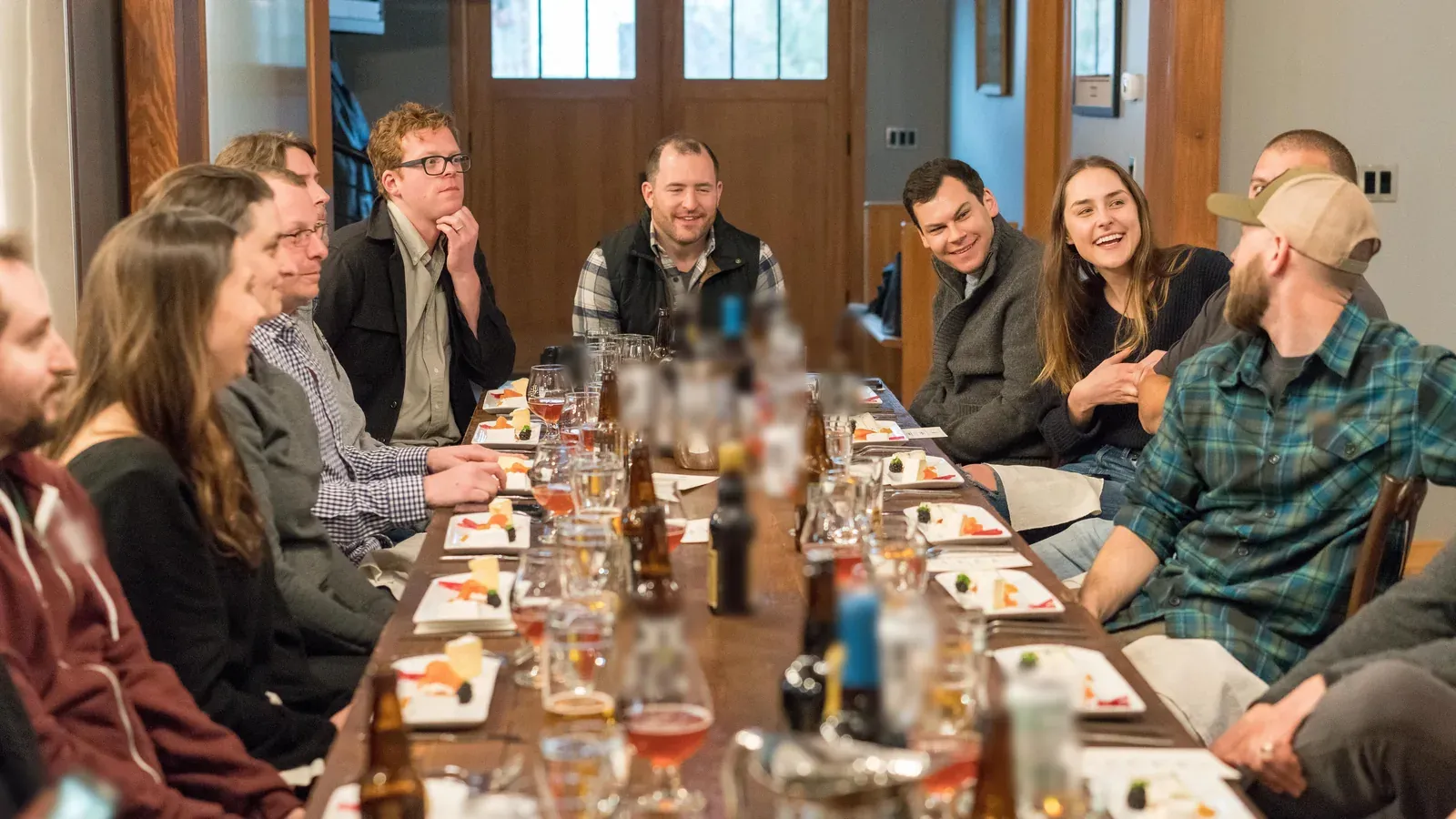
A corporate retreat, or company retreat, is a planned stretch of time away from the usual workplace where a group of colleagues works on one shared purpose: a strategy decision, stronger working relationships, a celebration or the start of a new year or quarter. It can be a single day or a few nights, and the setting is chosen to help that purpose rather than distract from it.
The terms overlap, and plenty of companies use them interchangeably. In practice, "retreat" tends to mean reflection, connection or strategy in a setting that feels different from the office, while "offsite" tends to mean structured working sessions that simply happen somewhere else. If what you need is a working agenda and a budget tool for a session-heavy event, our company offsite planning guide covers that step by step. This page is the wider view: what kind of retreat to hold, where, and who should build it.
Start with one outcome
Before anyone looks at a venue, agree on the one thing the retreat has to achieve. Most retreats fall into one of four goals:
- Strategy and decisions. Leadership needs time to work through a plan, a reorganisation or next year's priorities and leave with decisions made.
- Alignment and connection. A team that is new, growing, remote or recently restructured needs to know each other and agree how they will work.
- Celebration. A good year, a launch or a milestone deserves a moment the team will remember.
- Kickoff. A sales team, a new quarter or a new plan needs energy, context and clear targets before the work starts.
Trying to do all four in the same two days is how agendas get overstuffed. Every goal wants its own time, its own kind of session and its own kind of evening, and the result is a schedule where nothing gets the attention it needs. One commenter in an executive assistants' discussion of board retreats put it simply: "Mix of strategy and leisure is always good. Don't overstuff your itinerary." Pick one main outcome, allow one secondary one if it fits naturally, and let the rest wait for another event.
If you are a founder or the person setting the brief, our guide to setting the purpose and the spending ceiling before you plan helps you write both down in a form your planner can use.
Choose the retreat format
Once the outcome is clear, the format tends to follow. The table below matches common corporate retreat formats to the goals they suit best, with the overall shape of each and where to read more.
| Format | Best for | Typical shape | Go deeper |
|---|---|---|---|
| Board or leadership day in the city | Board meetings, quarterly leadership sessions, decisions that need a quiet room | A day, no overnight | Board meetings, leadership retreats |
| One-day reset outside the city | A change of scene for a team that needs to think, without an overnight | A day, with group transport there and back | This page and the region table below |
| Overnight team retreat | Connection, onboarding a growing team, working agreements | One night | Team retreats |
| Two-night strategy retreat | Strategy work that needs a full day in the middle, plus time to reflect | Two nights | Leadership retreat agenda guide |
| Sales kickoff | Targets, enablement and energy at the start of a year or quarter | A day to two nights | Sales kickoffs |
| Team celebration | Marking a milestone, thanking a team, end-of-year gatherings | An evening to one night | Company parties |
Not every retreat needs a hotel. Some board retreats are, as one EA described theirs, "really just a day delving into strategy for the org," held in "a large meeting room, usually at a hotel in town". If the goal is decisions rather than connection, a well-run day close to home can do more than a long trip that eats into the working time.
Where to hold a corporate retreat near New York City
For a New York team, the choice of region is mostly a choice about travel time. Under two hours, a group can leave Manhattan in the morning and be working by late morning; past about two and a half hours, the trip starts to shape the whole first day. The table below shows near-NYC regions with live Vantly sample events, with the approximate travel time those sample events list from Manhattan and the formats they cover.
| Region | Approx. travel from Manhattan* | Formats it suits | Local page |
|---|---|---|---|
| Manhattan (Midtown, Hudson Yards, Upper East Side) | In the city, under 30 minutes | Board and leadership days, no overnight | New York event planners |
| Hudson Valley (including the Hudson Highlands) | About 1–2 hours | Day resets, board overnights, strategy retreats, kickoffs, celebrations | Hudson Valley event planners |
| New Jersey (Princeton area) | About 1.5 hours | Overnight team retreats | — |
| Connecticut | About 1.4–2.5 hours | Day resets, board overnights, strategy retreats | — |
| Catskills | About 2–2.5 hours | Team retreats, kickoffs, strategy retreats, celebrations, warm-season day resets | Covered by the Hudson Valley planners page |
*Approximate door-to-door times by group transport from Manhattan, as listed on Vantly sample events; traffic, season and pickup point change them.
Use the time column as a planning band, not a promise. A Friday afternoon departure, a pickup in Brooklyn rather than Midtown or a winter storm can each add real time, so ask for the route and the departure window when you compare options. You can also see sample events near New York as examples of what a local designer tailors to a group.
Flying further afield is an option for a team that wants a bigger change of scene, and the same four decisions apply; just budget a full travel day at each end.
An example: a two-night strategy retreat in the Hudson Valley
Picture a 20-person product team leaving Manhattan on a Thursday morning for two nights in the Hudson Valley. The goal is next year's roadmap, so the first decision is a format with a full working day in the middle. The second is the region: about one to two hours away means the team can be in the room before lunch on day one and back in the city on Saturday afternoon. The next decisions are practical: whether the house sleeps twenty in private rooms, whether there is a room that seats twenty for a full day, how dinner is handled, and whether everyone rides together or some people drive. None of those answers depends on a particular venue name; they are the questions a designer works through before suggesting one.
What a corporate retreat costs (and what drives it)
There is no honest single number for what a corporate retreat costs per person, because the same team can spend very different amounts depending on a handful of choices. These are the ones that move the total most:
- Nights. A day trip, one night and two nights are different budgets, and every extra night adds lodging, meals and staff time.
- Group size and rooms. The number of people matters, but so does whether each person has a private room or some rooms are shared.
- Exclusive use vs a shared venue. Taking a whole house or estate costs differently from booking a block of rooms in a hotel that stays open to other guests.
- Transport from Manhattan. A chartered van or coach, tolls, parking and driver hours add up, and they rise with distance.
- Dining model. A private chef cooking for the group, an on-site restaurant and catered meals each price differently, and so do alcohol and late-night food.
- Facilitation and activities. An outside facilitator, a guided activity, AV for a workshop or a photographer each add a line.
- Season. Peak foliage and summer weekends are in demand near New York; midweek and shoulder-season dates can give you more choice.
When you want real figures, start from the sample events: each lists a "from" price per person as an example, which a designer then adjusts for your dates, group and options. For the budget itself, our guides to a leadership retreat budget, a budget sheet Finance will accept and getting finance approval and a PO take you through it line by line.
How far ahead to plan
Start as soon as the goal and a rough date range are agreed, and hold the dates before the agenda is final. The agenda can change; the house you wanted on the weekend you wanted can't be recovered once someone else books it. Popular seasons near New York are busier, so a retreat with fixed dates or a specific kind of property needs more lead time than a flexible one.
A sensible order is: agree the goal and the spending ceiling, choose the format and region, shortlist two or three options, hold the dates, then build the agenda and send invitations. Holding dates usually means a deposit, so read our guide on when to pay the venue deposit before you commit money.
Venues: what to check before you fall for the photos
A venue can look perfect in photos and still not work for a retreat. Before you shortlist anything, check:
- Three capacities, not one. How many people the venue can sleep, seat for a working session and seat for dinner are often three different numbers. Our guide to sleep, meet and dine capacity shows how to check each.
- Private rooms vs shared beds. A house that "sleeps 20" may only do so with bunk rooms or shared beds. Ask for the bedroom layout before you count heads.
- Exclusive use, in writing. Some venues may offer exclusive use at your group size; confirm it in writing, and know the difference between a true buyout and a soft room block.
- Wi-Fi and AV that survive a workshop. Ask about the connection in the actual meeting room, the screen and the power, not just "Wi-Fi available." Our NYC-area venue diligence checklist lists the questions.
- Dining and the hours around it. Find out who cooks, when, and what happens outside meal times. In an EA's planning thread for a large overnight retreat, one commenter warned that at their venue there was "nothing there after hours so if you're hungry you need to have your own snacks," and added, "Make sure you handle card key distributions yourself."
- Getting there. Confirm parking, the last stretch of road for a large vehicle and drop-off space. Our guide to group transport for company offsites compares a chartered van with self-drive.
A simple retreat agenda shape
Most retreats work best with a simple shape that protects the main working time. For a two-night retreat, a skeleton that works for many teams looks like this:
- Arrive. Travel, settle in and have a light lunch, with no heavy content in the first hour.
- One working block. A focused afternoon session that frames the main question.
- Shared dinner. The evening that builds the connection the next day depends on.
- Main session day. The full working day, with real breaks and a slower afternoon.
- Close with owners and next steps. A short final session where every decision gets an owner and a date before anyone leaves.
For copy-ready sample agendas, use our offsite agenda template or, for leadership and strategy retreats, our leadership retreat agenda architecture guide.
Ways to plan it: DIY, a platform, or a local event designer
There are three broad ways to build a corporate retreat, and each fits a different situation.
| Approach | Fits when | What you handle | Read more |
|---|---|---|---|
| Plan it in-house | A small group, a nearby venue you know, and someone with time to run it | Sourcing, contracts, payments, transport and the day itself | In-house vs outsourced planning |
| Enterprise software or a booking platform | You run many events at scale, or you want to book a venue or packaged trip yourself | The design and the coordination between vendors | Cvent, Naboo, BoomPop, TeamOut, Offsite.com |
| A local event designer (Vantly) | You want a tailor-made retreat built around your goal by someone who knows the destination | The goal, the guest list and the sign-off | How to brief a local event designer |
Planning in-house keeps control and avoids fees, and it works for a small, simple retreat. It also puts every contract, deposit and late-night question on one person's desk, so it is worth being honest about how much time that person has. Our guide to planning in-house vs outsourcing helps you weigh it.
Software and booking platforms fit different needs. Cvent is enterprise event management and sourcing software for organisations running many events. Naboo is built around event procurement for larger companies. BoomPop, TeamOut and Offsite.com help teams find and book venues and planned trips, with different amounts of planning help. Our alternatives pages compare each one honestly.
A local event designer starts from your goal rather than from a catalogue. At Vantly, that is the job: a designer who knows the region shapes the retreat around your group, and you can browse local planners in New York and the Hudson Valley today.
How Vantly builds a corporate retreat
Every Vantly retreat is tailor-made. A local event designer who knows the region starts from your goal, your group and your dates, suggests the format and the places that fit, and then helps confirm the details that matter: the rooms, the working space, the dining and the transport from Manhattan. You see the options side by side and decide; the designer can adapt them until they fit.
Our intent is one vendor, one PO for the event, rather than a separate contract and deposit for every vendor. The sample events you can browse are examples of what a designer can build, and each one is a starting point a designer adapts to your team rather than a fixed package.
Plan your retreat with a local designer
Tell us your goal, your group and the dates you have in mind. A local event designer who knows the destination can shape a retreat around them and come back with options you can compare. Get a custom quote.
Frequently asked questions
What is a corporate retreat?
A corporate retreat is time away from the usual workplace, typically one to three days, where a team works on one shared goal: strategy, connection, celebration or a kickoff. The setting is chosen to support that goal. Decide the outcome first, then the format and the place.
What's the difference between a corporate retreat and a company offsite?
The terms overlap. "Retreat" tends to mean reflection, connection or strategy in a setting that feels different from work; "offsite" tends to mean structured working sessions held somewhere else. Many companies use both words for the same event, so focus on the goal rather than the label.
How far in advance should you plan a corporate retreat?
Start as soon as you have a goal and a rough date range, and hold the dates before the agenda is final. Popular seasons near New York are busier, so fixed dates or a specific kind of property need more lead time than a flexible plan.
How much does a corporate retreat cost per person?
It depends on a few choices: the number of nights, group size and room sharing, exclusive use or a shared venue, transport, the dining model, activities and the season. Vantly sample events show a "from" price per person as an example, which a designer adjusts for your group and dates.
How long should a corporate retreat be?
Match the length to the goal. A board day or a one-day reset can work without an overnight. Connection and onboarding benefit from one night. Strategy work that needs a full day in the middle fits two nights best. Longer than that is worth it mainly when travel is long.
Where can we hold a corporate retreat near New York City?
Within about one to two and a half hours of Manhattan, the Hudson Valley, New Jersey's Princeton area, Connecticut and the Catskills all suit retreats, and Manhattan itself works for board and leadership days. The region table on this page lists approximate travel times, and the sample events show examples.
Do we need a planner for a corporate retreat?
Not always. A small, nearby, simple retreat can be planned in-house. As the group, the distance or the number of vendors grows, a local event designer who knows the destination can save time and help catch problems early, and builds the retreat around your goal rather than a template.
Related guides
- How to plan a company offsite
- Team retreats
- Leadership retreats
- How to brief a local event designer
- Local event planners
- All Vantly guides
Sources
- Vantly, sample events near New York, travel times and regions as listed on each event page, read 9 October 2026
- r/ExecutiveAssistants, "Planning Retreats" (January 2024)
- r/ExecutiveAssistants, "Company retreat locations near Washington DC" (August 2026)