
How to plan a national sales meeting: format, venue, agenda and budget
Plan a national sales meeting in this order: goal and headcount, then format, then a venue type that fits both the breakouts and the room block, and only then the agenda, the awards night and the budget lines.
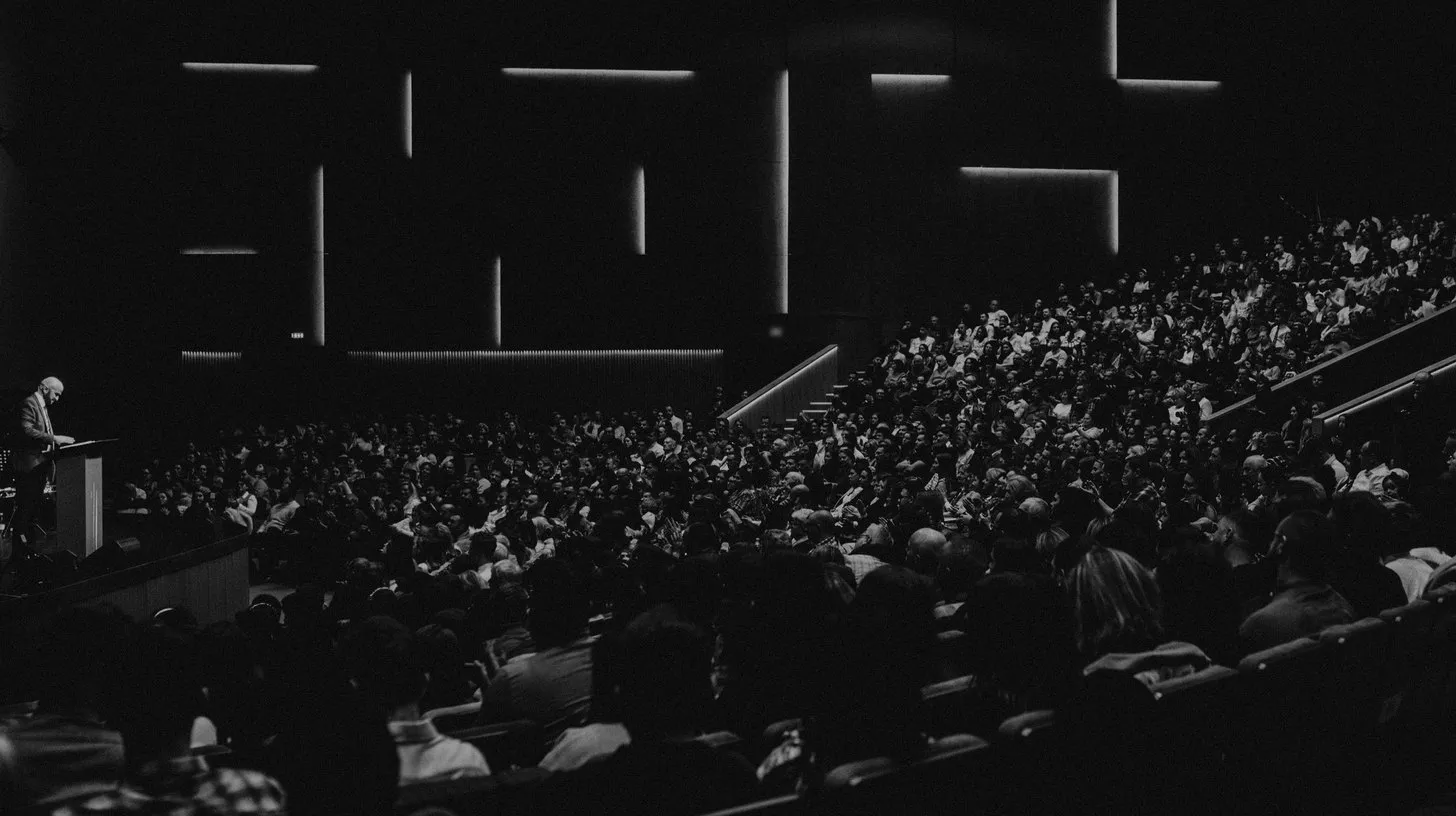
A national sales meeting, or annual sales meeting, brings the whole sales organization together for a few days: a plenary, breakouts by region or role, a room block that spans every territory, an awards night and sometimes a partner or dealer track. Many companies call this their sales kickoff; for the kickoff itself, see our sales kickoffs page. The decisions below are written for the sales operations, field marketing or event lead, or the EA to the CRO, who has to turn "we're doing the national meeting in Q1" into something the CRO and Finance can approve.
If you already know your headcount, jump to the format and venue-type picker. Rates, availability and contract terms vary by city, season and venue, so treat the order of decisions as the fixed part and confirm the details locally.
National sales meeting, annual sales meeting or sales conference: what changes
The names overlap, and companies use them loosely. What changes is who attends and how the days are shaped.
- National sales meeting: the whole sales organization of one country, usually with a shared plenary and breakouts by region or role.
- Annual sales meeting: the same event defined by its rhythm. It happens once a year, often at the start of the sales year, to set the plan and recognize the year before.
- Sales conference or sales convention: a broader, conference-format event. It may add partners, dealers or customers, run several tracks at once and include an exhibit or demo area.
- Global or international sales meeting: several countries in one place, which adds travel, time zones and language to every decision.
Whatever you call it, the planning job is the same: a conference-format event with one main room, several breakout rooms, a room block and a recognition moment.
Choose the format and venue type
The format decides how many rooms you need at the same time, and that decides which venue types can work. The picker below is for a national sales conference or meeting, which is larger than a team offsite and often brings together the whole sales org plus leadership. Read across a row to see which venue types fit and what each choice adds to the room block and the budget. Sequencing notes reflect how local planners usually order these decisions, not a benchmark.
| Format | Suits | Venue types that fit | Breakout rooms needed | Room-block notes | Budget lines it adds | Sequencing note (planner practice) |
|---|---|---|---|---|---|---|
| Single plenary | One message for everyone, a smaller or single-region team, a first national meeting | Conference hotel, resort, or a local event venue plus nearby hotels | Few or none beyond the main room | One block, simplest to size | Main room AV, plenary staging, group meals | Venue choice comes first because the main room sets the limit |
| Plenary plus regional tracks | Multi-region teams with different targets or markets | Conference hotel or conference center | One room per region at the same time | Arrivals vary by region, so expect shoulder nights | Breakout AV, extra meeting space, more room-block management | Confirm breakout room counts before signing the venue |
| Plenary plus role tracks | Teams where account executives, SDRs, managers and sales engineers need different content | Conference hotel or conference center | One room per role track at the same time | Similar to regional tracks; managers may arrive early | Breakout AV, speakers or trainers per track | Lock track owners early so room setups can be planned |
| Add a partner or dealer track | Channel partners or dealers who need their own sessions | Conference center, or a conference hotel with a separate meeting wing | At least one room kept apart from internal sessions | A separate sub-block or a separate booking for partners. Partner rooms inside your block usually count toward your pick-up, so partner cancellations can become your attrition risk | Partner badges, separate meals or receptions, extra transport | Decide early whether partners stay in your block |
| Add an awards night | Recognition for the year before, often the high point of the meeting | Any of the above with a ballroom or an off-site event venue | A ballroom or event space that can be reset or used for one evening | Usually no change, unless partners or guests join, or the awards night falls on the last evening and people need one more night | Stage, lighting, AV, dinner, awards, transport if it is off-site | Book the space with the main venue so dates and capacity line up |
How the venue types compare. A conference hotel keeps everyone under one roof, which makes the room block, meals and evening simpler. A conference center usually offers more breakout rooms and flexible space, but you may need nearby hotels for the room block. A resort suits a smaller meeting where the setting matters, as long as the meeting space fits. A local event venue plus nearby hotels gives you a distinctive plenary or awards space, with more transport between them. For checking whether a venue can sleep, meet and feed your group at the same time, see the three venue capacity numbers.
Size the room block
According to the Events Industry Council's APEX accepted practices, a room block is the total number of sleeping rooms (or, at a conference center, packages) reserved for an event, and guest room attrition is the difference between what you committed to in the contract and the rooms or revenue you actually used (APEX Contracts, Events Industry Council). The gap between those two is where penalties come from, so sizing the block carefully matters more than negotiating it fast.
Build the estimate from the bottom up:
- Headcount by region. List who is coming from where, and who is local enough to skip a room. Add speakers, trainers and your own event staff, who often need rooms too.
- Arrival patterns. Regions that fly in from far away may need an extra night before; regions that leave early may not need the last night.
- Shoulder nights. The nights before and after the main dates, for early arrivals, staff setting up and managers' meetings.
- Sharing policy. Decide whether anyone shares a room. It has a large effect on the block, so settle it before you request quotes.
- Partners and guests. Decide whether partners, dealers or plus-ones book inside your block or separately.
Once the block is contracted, ask the hotel for regular pick-up reports, which APEX describes as the report that tells the organizer how many rooms have been reserved out of the group block as the event approaches. They show early whether the block is filling. For attrition clauses, release dates and what to negotiate, read our guide to hotel attrition and release dates for a room block.
An annual sales meeting agenda shape
An annual sales meeting agenda follows a conference shape rather than a week of slides. A typical structure has five parts:
- Plenary. The plan for the year, the strategy behind it and the leadership message, kept short enough that people remember it.
- Regional or role breakouts. Where the plan becomes each team's plan, run by the people who manage those teams.
- Practice. Time to work on real deals, new messaging or new products in small groups.
- Recognition. The awards night or a recognition moment in the plenary.
- An optional evening. A dinner or reception, with a quieter option for people who need it.
For how to build the days and sequence the blocks, see our guide to agenda architecture for sales leaders. For the run of show, AV and on-site production, use the production checklist for field marketing.
Dealer meeting or partner track
If channel partners or dealers attend, decide early whether they join a separate dealer meeting track or only a few shared moments. A separate track gives partners their own content and keeps internal pipeline, pricing and compensation sessions apart. Ask your legal or partner team whether any session needs an NDA, and mark rooms and agendas clearly. Different badge colors or badge types make it easy for staff to see who is in which session, and shared plenary and awards moments keep partners part of the event.
Awards night and recognition
The awards night is where recognition becomes visible, and it is also where AV and food and beverage spend can grow quickly. Choose the format first, then price it.
- Awards in the plenary. Recognition on the main stage during the day. It uses the AV you already have and adds the least to the plan.
- Awards dinner at the venue. A seated dinner in the ballroom or event space, with a stage, lighting and a run of show.
- Awards night at a separate event venue. A distinctive setting, which adds transport, a second set of AV and a second venue contract. Plan the ride back to the hotel for everyone at the end of the night, so nobody needs to drive after the dinner.
Each step up adds stage, AV, catering and coordination. The production checklist for field marketing covers awards, food and beverage, and the spouse or plus-one program in detail.
Budget lines
List every budget line before the first quote arrives, and ask each venue or local planner to price against the same list. These are lines, not amounts.
- Guest rooms: the room block, shoulder nights and any attrition exposure.
- Meeting space and food and beverage minimums: some hotels link meeting room rates to a food and beverage minimum.
- AV and production: plenary staging, breakout AV, streaming or recording, and technical staff.
- Transport: airport transfers, transport to an off-site awards venue and any group shuttles. See our guide to group transport for company offsites.
- Awards: trophies, the awards dinner and any entertainment.
- Speakers: external speakers, trainers and their travel.
- Registration and badges: attendee registration, badges and any separate partner badges.
- Planning and on-site coordination: the local planner's fee and on-site team.
- Venue wifi and connectivity: worth confirming before you sign; see how to check venue wifi.
- Contingency: a reserve for headcount changes, travel disruption and late requests.
- Service charges and taxes: these sit on top of most venue, catering and AV quotes, so ask for them on every line.
On the finance side, IRS Publication 463 states that, in general, you can deduct only 50% of business-related meal expenses unless an exception applies (IRS Publication 463). Check with your tax advisor on how that applies to your meeting. If Finance wants an outside reference for lodging and meals by location, the GSA per diem rates are the rates federal agencies use to reimburse employee travel. They are a public benchmark, not a meeting price. To compare proposals line by line, use our list of what to ask in a custom event quote.
When a local planner helps
A national sales meeting can easily end up with an agency, a destination company, an AV vendor, a transport company and the hotel's own team, each with a separate contract and invoice. The alternative is one local planner, one fee.
A Vantly local planner who knows the area shortlists venues that fit your plenary, your breakouts and your room block, negotiates the block, and folds rooms, food and beverage, AV and transport into one priced proposal. You keep ownership of the content, the agenda and the recognition; the local planner handles the logistics around them. Browse local planners to see who works in the cities on your shortlist, or see sample events as examples a local planner tailors to your meeting.
Frequently asked questions
How do you plan a national sales meeting?
Set the goal and the headcount by region first, then choose the format: one plenary, or a plenary with regional, role or partner tracks. Pick a venue type that fits the breakout rooms and the room block, then build the agenda, the awards night and the budget lines. The picker shows what each format adds.
What should be on an annual sales meeting agenda?
An annual sales meeting agenda usually combines a short plenary on the plan, regional or role breakouts, practice time on real deals or new products, a recognition moment and an optional evening. Keep the plenary brief so the breakouts have room. Our guide to agenda architecture for sales leaders covers how to sequence the days.
Hotel or conference center for a national sales conference?
Choose by headcount, breakouts and room block. A conference hotel keeps everyone under one roof, which simplifies rooms, meals and evenings. A conference center can offer more breakout rooms and flexible space but usually needs nearby hotels for sleeping rooms. A local planner can compare both against your format before you sign.
How do you run a dealer meeting alongside a sales meeting?
Run it as a separate track with its own content, rooms and access rules, and bring dealers into shared moments such as the opening plenary and the awards night. Keep internal pipeline and compensation sessions apart, ask your legal team whether an NDA is needed, and use clear badges so staff can see who belongs where.
What are good annual sales meeting topics?
Good annual sales meeting topics connect directly to what the team will do next: the plan and targets for the year, new products or messaging, practice on real deals, lessons from wins and losses, and recognition for the year before. Pick a few, give each an owner, and see the agenda shape for where they fit.
Related guides
- Sales events planned by a local planner
- Agenda architecture for sales leaders
- Production checklist for field marketing
- Hotel attrition and release dates for a room block
- Venue capacity: sleep, meet and dine
- What to ask in a custom event quote
Sources
- Events Industry Council, APEX Contracts Accepted Practices
- Internal Revenue Service, Publication 463, Travel, Gift, and Car Expenses
- U.S. General Services Administration, Per diem rates