
Dietary and Allergy Workflow for Company Offsites and Retreats: Survey, Kitchen, Labels
Someone at the lunch table holds up a wrap and asks, "Is there sesame in this?" and nobody knows. That moment is avoidable, and the fix is a simple three-step workflow. Collect dietary needs by name, with a severity tag, before an internal cutoff. Send whoever is cooking one clear table and get it confirmed in writing. Then label every dish at service, and make sure one person on site holds the list. Survey, kitchen, labels. The rest of this guide shows how, whether you are feeding a two-night leadership retreat in the Hudson Valley, a board day in Midtown or the weekly team lunch. This is an operations workflow, not medical advice. Each attendee's own allergy plan, and the kitchen's own procedures, always come first.
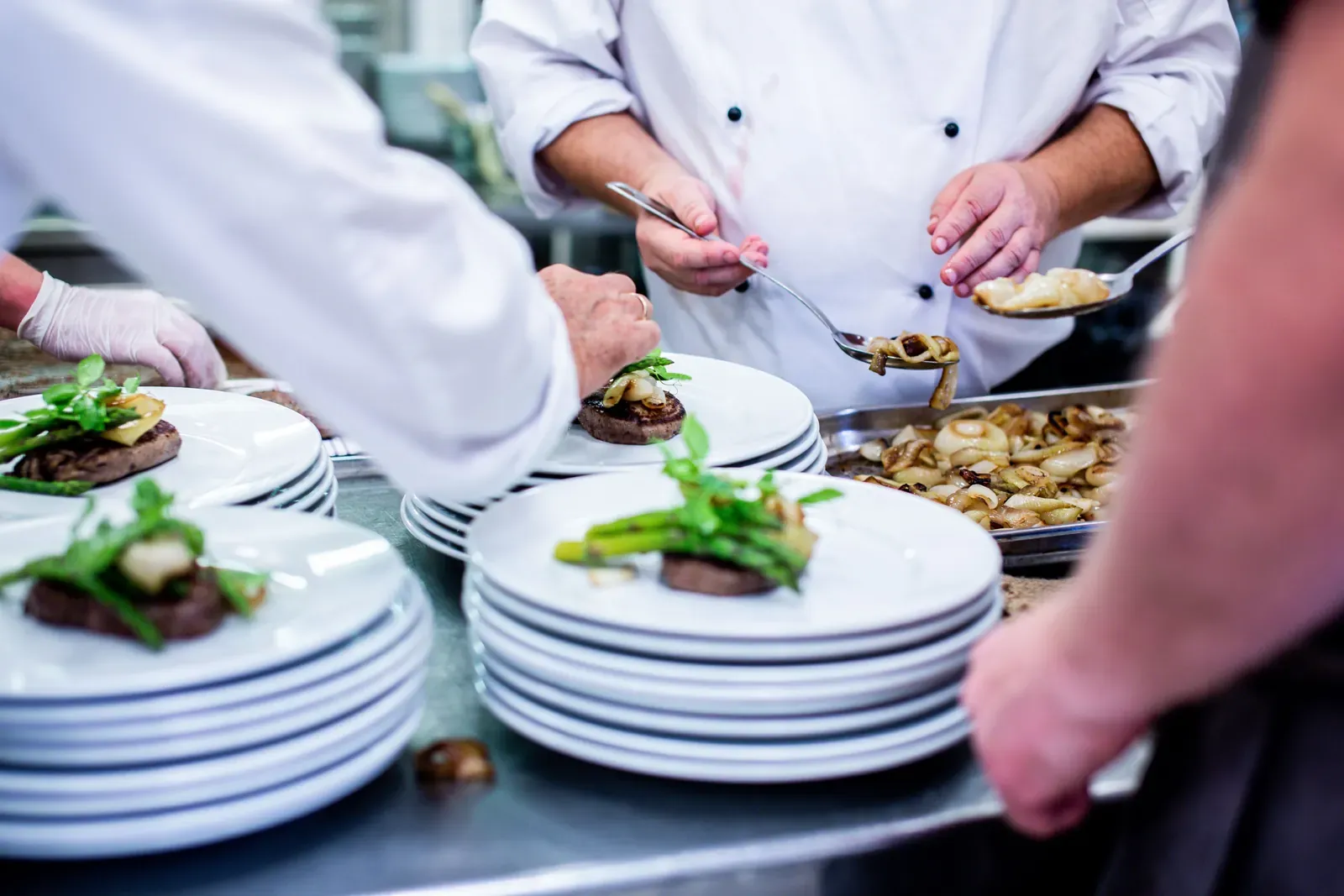
Someone at the lunch table holds up a wrap and asks, "Is there sesame in this?" and nobody knows. That moment is avoidable, and the fix is a simple three-step workflow. Collect dietary needs by name, with a severity tag, before an internal cutoff. Send whoever is cooking one clear table and get it confirmed in writing. Then label every dish at service, and make sure one person on site holds the list. Survey, kitchen, labels. The rest of this guide shows how, whether you are feeding a two-night leadership retreat in the Hudson Valley, a board day in Midtown or the weekly team lunch.
This is an operations workflow, not medical advice. Each attendee's own allergy plan, and the kitchen's own procedures, always come first.
The pipeline at a glance
Dietary problems at company events tend to go wrong at one of three handoffs: attendee to you, you to the kitchen, or kitchen to plate. Give each handoff an owner and a deadline.
| Step | What happens | Owner | Deadline |
|---|---|---|---|
| 1. Survey | Attendees submit their needs by name, with a severity tag, in one form | Whoever owns the RSVP: EA, office manager or People Ops | Your internal cutoff, set ahead of the earliest kitchen deadline |
| 2. Kitchen handoff | One table goes to whoever is cooking each meal; the kitchen confirms receipt and the planned swaps in writing | The event owner, with the chef, caterer or banquet lead | The kitchen's own lead time, which you ask for rather than assume |
| 3. Labels and service | Every dish is labeled, named meals reach the right person, and one person on site holds the list | The kitchen lead, plus your on-site point person | Reconfirm the day before; check labels before service opens |
One poster on r/ExecutiveAssistants put the worry plainly: "How do you guys provide catered lunches when anyone can be allergic to anything without you knowing?" You cannot plan for what nobody has told you, which is why the workflow starts with asking, clearly and early, and why the invitation should say that telling you is part of saying yes.
Step 1: the survey (fields that work)
Good dietary surveys are short, specific and named. Vague questions ("Any dietary requirements?") produce vague answers ("Healthy, please"), and no kitchen can cook to those. Put the questions inside the RSVP form, so everyone who says yes also answers them, and give it a clear deadline.
These are the fields that work:
| Field | Format | Why it matters |
|---|---|---|
| Full name (and team) | Text | The kitchen plates for a person, not a count |
| Meals you will attend | Checkboxes by day and meal, plus expected arrival time | Late arrivals and partial attendees still need the right plate at the right meal, held back or packed if they miss service |
| Do you have a food allergy? | Yes / No | Separates allergies from everything else at a glance |
| Which allergens? | Checkboxes for the nine major allergens, plus "Other" | Specific, consistent answers the kitchen can act on |
| Severity tag | Allergy / Intolerance / Preference / Religious or ethical | Tells the kitchen which lines are strict and which are flexible |
| Cross-contact concern | Yes / No, with a note | Flags whether shared equipment and traces matter, not only the ingredient |
| Anything else we should know | Private free text, with the prompt: "Anything we should know to keep you safe, such as carrying an auto-injector?" | Covers fasting times, meal-timing needs, no alcohol in cooking and safety notes; the attendee decides what to share |
| Best way to reach you with questions | Email, phone or chat | So the kitchen's follow-up questions reach the attendee, not a guess |
Use the nine major allergens
For the checkboxes, use the federal list. The FDA names nine major food allergens: milk, eggs, fish, crustacean shellfish, tree nuts, peanuts, wheat, soybeans and sesame. Sesame is the newest. The FASTER Act made it the ninth major allergen, and packaged foods have had to label it as an allergen since January 1, 2023 (FDA). Older templates may still list eight, so check yours.
The federal rule covers packaged food labels rather than catered buffets, but the same nine make a clear checklist for your form now and your tent cards later.
The severity tag does the heavy lifting
The most useful field is the severity tag, because it stops a severe allergy from sitting in the same column as "no mushrooms, please." Use four tags:
- Allergy. Strict. The ingredient is left out, and where the attendee flags cross-contact, shared equipment matters too.
- Intolerance. The ingredient is left out. Ask the attendee whether shared equipment matters to them.
- Preference. Vegetarian by choice, low-carb, dislikes. Accommodated where possible.
- Religious or ethical. Strict in a different way: halal, kosher, vegan, no alcohol in cooking. These need sourcing and preparation answers, not just a dish swap. If someone needs certified kosher or halal food, ask the kitchen early whether it can supply it. If it cannot, ask whether sealed meals from an outside certified supplier are allowed at the venue, and how they will be handled and served.
Keep the free-text box, but never let it be the only field. Checkboxes and tags are what make the list readable at speed in a busy kitchen.
Food is part of accessibility
A reader who wrote to Ask a Manager about a company retreat put it well: "accessibility extends far beyond just booking accessible hotel rooms." Meals are part of that, and a clear form tells attendees their needs were expected rather than tolerated. Our guide to planning an inclusive company retreat covers the rest of that picture; this guide stays on the food pipeline.
For recurring office catering
If you order lunch for the same team every week, keep a standing dietary list instead of re-surveying. Ask people to update it when something changes, refresh it on a regular schedule and add new joiners at onboarding.
Anonymous vs named
The short answer: named for anything strict, anonymous only for counting preferences. A kitchen cannot plate a safe meal for "one person with a nut allergy" if nobody knows who that person is when the plates come out.
Anonymous answers still have a place. If you simply want to know how many extra vegetarian portions to add to a buffet, an anonymous count is fine and feels less intrusive. Some teams run both: a named section for strict needs and an optional anonymous question for preferences.
A named list comes with a responsibility. Treat it as need-to-know:
- Share it only with the people who cook, serve or coordinate the meals, plus your on-site point person.
- Send the kitchen what it needs and nothing more: name, need, severity tag and meals. Leave out anything from the private free-text box unless the attendee asked you to pass it on.
- Keep it out of public view. No shared channels, signs or reading it aloud at the buffet.
- Tidy up afterward. Delete or archive working copies in line with your company's data policy.
- Say who will see the answers. One line in the form is enough, and people answer more fully when they know.
For seated meals, a discreet marker on the place card, or a seat number on the kitchen's table, lets servers find the right person without announcing anyone's health to the room. Agree the marker with the kitchen in advance.
Step 2: the kitchen handoff
First, who is cooking?
The handoff depends on who is cooking each meal, and on a multi-day retreat that can change from breakfast to dinner. Confirm it with the venue meal by meal. Our guide to private chef vs on-site restaurant for a company retreat covers how to choose. Here is how the choice changes the dietary handoff.
| Who is cooking | How the list travels | What to ask | Watch out for |
|---|---|---|---|
| Hotel or venue banquet kitchen | To the catering or event manager, who should write it into the banquet event order (BEO) for each meal and pass it to the chef | Who on the kitchen side receives it, and who is your contact on the day? Will the special meals appear on each BEO? How are buffet dishes labeled? Can allergy meals be plated separately? | The list stopping at the sales or events office, or a signed BEO that shows the headcount but none of the special meals |
| House restaurant or dining room | To the restaurant manager or chef ahead of the meal | Can the set menu be adjusted per person? Is there a private room or set sitting for the group? | A set menu with less room to cook to individual needs, so ask earlier |
| Hired private chef | Directly to the chef, who can plan the menu and shopping around it | Will you build the menu around the list? Is there space for separate prep in this kitchen? Who serves? | A home kitchen with limited space and equipment for separate prep |
| Drop-off caterer (office lunch, board day) | With the order; your team sets out the food | Will each item arrive labeled with its ingredients? Will named meals arrive packed and marked separately? | Unlabeled boxes, and one "vegetarian" tray standing in for every need |
| Restaurant in town (team dinner) | To the restaurant's events or reservations contact when you book, then reconfirmed before the night | Is there a set group menu, and can it be adjusted per person? Can named meals be pre-ordered? Will servers be briefed on the group's list? | Assuming the printed menu notice replaces your list, or a set group menu with no room for swaps |
That last row matters in New York. The New York State Department of Health says all menus, including those offered online, must include one of: a statement such as "If you have a food allergy or intolerance, please notify us," allergen information for each item, or a note that allergen information is available on request (NYS DOH). It is a helpful prompt at a Manhattan team dinner, but the restaurant still needs your names and needs before the night, not at the table.
Send one table, not a forwarded thread
Another poster on r/ExecutiveAssistants asked the question most first-time planners have: "If at a hotel with hotel catering, would I just provide the hotel the team’s list of special dietary needs?" Yes, but the format matters. Do not forward a raw survey export or a chain of emails. Send one table, per meal or per day, that a cook can read at a glance:
| Name or seat marker | Need | Severity tag | Meals affected | Swap or plan | Kitchen confirmed |
|---|---|---|---|---|---|
| A. Rivera, table 2 | Sesame | Allergy, cross-contact concern | All meals | Separate plated meal; no tahini or sesame oil | Yes, chef, in writing |
| J. Chen | Gluten | Intolerance | Lunch and dinner | Swap the bread service; gluten-free pasta | Pending |
| M. Okafor | No pork | Religious | All meals | Check stocks, sauces and sides, not just the main | Yes |
| S. Patel | Vegetarian | Preference | All meals | Covered by the main vegetarian dish | Yes |
Then ask the kitchen to reply in writing, confirming it has the list and how it will handle each line. "Noted" is not the same as "Chef has planned a separate sesame-free plate for A. Rivera at every meal."
Ask how the kitchen prevents cross-contact
For every line tagged as an allergy, ask how the kitchen prevents cross-contact. FARE describes cross-contact as an allergen being accidentally transferred from one food to another, and notes that cooking does not remove the risk of a reaction (FARE). FARE also notes that many food service teams know the more familiar term, cross-contamination, which is about bacteria and is a different problem, so use the specific word and explain it if needed.
Questions worth asking, adapted from FARE's list for chefs and managers:
- Is there a separate area for preparing special-diet meals?
- Will separate, freshly washed cutting boards and utensils be used?
- Is the grill or fryer shared with other foods?
- Who prepares and plates the allergy meals, and how will those plates be labeled and delivered?
- On a buffet, will each serving utensil stay with its own dish?
The AAAAI's guidance for event planners lists the shortcuts that cause trouble: picking nuts off a salad and assuming it is safe, believing hot fryer oil destroys allergens, stirring a milk-free soup with a spoon used for a cream soup, and chopping or mixing different foods on shared boards and pans (AAAAI). It also describes event guests as a "captive audience": unlike restaurant diners, they cannot simply eat somewhere else.
For attendees with a severe or life-threatening allergy, the handoff table is the starting point, not the whole plan. Ask the attendee how they would like it handled and whom to brief, ask People Ops how emergency plans and contacts should be handled, and give the kitchen time to answer in detail. Our companion guide to severe food allergies at company events goes deeper.
Last-change cutoff
Set two dates: the kitchen's and yours. Ask each kitchen how much notice it needs for dietary needs and final numbers, and get the answer in writing. A private chef shopping for a weekend, a hotel banquet kitchen and a restaurant in town will each answer differently, so do not carry one deadline over to another, and do not guess.
Then set your internal survey cutoff earlier than the earliest kitchen deadline. The gap gives you time to chase missing answers, clarify vague ones ("Is that an allergy or a preference?") and build the handoff table calmly.
Line the dietary list up with the final guarantee. Hotels and caterers usually ask for a final headcount before each meal, and that is the number you are billed for. When you send it, send the count of each special meal alongside it and check that it matches your handoff table. Ask whether special meals are counted within the guarantee or added on top, and whether the kitchen prepares any extra plates beyond it. Then read each BEO or order confirmation before you sign it: the special meals, and the names or seat markers that go with them, should be on it.
After your cutoff, run changes with five simple rules:
- New allergies are always accepted. Pass them on immediately, and tell the attendee honestly what the kitchen can still do.
- Preference changes are accepted where possible. Say so in the invitation.
- Every change goes through one person, usually you, so the kitchen hears one voice instead of five.
- Every change is reconfirmed in writing with the kitchen, and the handoff table is updated the same day.
- Substitutes and late additions fill in the form too, before they join the meal count, so a replacement attendee never arrives with a need nobody knows about.
The day before the event, re-send the final table to every kitchen and ask for confirmation, including any late changes. That reconfirmation is one of the five checks in our company offsite day-before runbook.
Step 3: day-of labels and service
Label every dish
The AAAAI advises event planners to label all food offerings, and a tent card in front of every dish is the simplest way. A label that works has five parts:
| Label field | Example | Note |
|---|---|---|
| Dish name | Roasted chicken with herbs | A plain description, not a menu flourish |
| Contains | Milk, wheat | Any of the nine major allergens, written in full, plus any other allergen on your list |
| Diet tags | Vegetarian, vegan, made without gluten | Only when the kitchen confirms them. Use "halal" or "kosher" only when the kitchen can confirm how the food was sourced and prepared |
| Prepared separately? | Yes, separate prep area | Only if true; otherwise leave it off |
| Questions | "Ask [name]" | Your on-site point person |
A few rules keep labels honest:
- The kitchen writes the "Contains" line, not you. Only the people who made the food know what is in the sauces, dressings, stocks and garnishes.
- Check every card against its dish before service opens. Cards drift when trays are refilled.
- Read packaged snacks too. Check the "Contains" statement and ingredient list. The FDA notes that some manufacturers changed recipes after the FASTER Act, so a familiar product may now contain sesame.
- Do not over-promise. "Allergen-free" promises more than a shared kitchen can guarantee. "Made without peanuts" is clearer, with "prepared in a shared kitchen" added when that is the case.
Plate strict needs by name
For allergies and other strict needs, a named, plated meal works better than a buffet tray. FARE recommends that allergy meals be labeled and delivered separately. Ask for each plate to be covered, marked with the attendee's name or seat marker, and handed over directly, ideally by the kitchen lead. On a buffet, ask for named plates to come out before the line opens.
One person on site holds the list
Name one person on site who holds the full list: who needs what, at which meals, and the kitchen contact for each. On a multi-day retreat, name a backup for the hours you are running a session. That person:
- Walks the buffet with the kitchen lead before service and checks the cards.
- Knows which attendees have named meals, and confirms each one arrived.
- Answers "Is there X in this?" by asking the kitchen, never by guessing.
- Knows the venue's emergency procedures and the nearest medical help.
Beyond the main meals
The list travels with the group, and the main meals are only part of it. The moments that often slip are the ones nobody thinks of as catering:
- Coffee breaks. Pastries and snack bars rarely come labeled, and the plant milk at the coffee station may be almond (a tree nut) or soy. Ask the venue to label break food the same way as the buffet.
- Welcome bags and room drops. Choose packaged items with the label intact, read the "Contains" line against your list, and leave out anything homemade or unlabeled.
- The bar and receptions. Ask for a real alcohol-free option beyond soda and water. Ask the bar about allergens in mixers, garnishes and bar snacks too, since some cocktails use egg white, cream liqueurs or nut-based syrups.
- Travel days. Shuttle or van snacks come from the same list, with labels intact. For flights, remind attendees with strict needs to arrange any special meal with the airline or bring their own food.
- A stocked rental-house kitchen. Self-serve breakfasts mean shared toasters, spreads and knives. Keep allergy-safe items labeled and apart, and tell the group how the kitchen is set up.
- Activities with food. A cooking class, a tasting or a vineyard lunch is another kitchen. Send the host the lines of your table that apply, ask the same cross-contact questions, and get the answer in writing.
Fewer complaints: norms that help
Even a perfect workflow will not please everyone, and catered food attracts opinions. One office manager on r/ExecutiveAssistants asked a question many planners will recognize: "How do you handle the complaints from staff, no matter what food you cater for events?" Some complaints are about taste. Many others can be prevented by setting expectations early and making the food work for more people by default.
- Set expectations in the invitation. One sentence covers it: "Please tell us about allergies and dietary needs in the RSVP by [date]. Allergies and religious needs will always be accommodated; preferences will be accommodated where possible."
- Offer one place to submit. Use the form, rather than a mix of direct messages, emails to the venue and comments in a team channel. Changes go through the same place.
- Have a no-form fallback. Chase once, by name, before the cutoff. For anyone still missing, order a varied, clearly labeled spread with a couple of simple dishes made without the major allergens, and make sure your on-site person can ask the kitchen for a plain plate.
- Choose mains that work for many. A main that is naturally vegetarian, or made without the allergens that appear most on your list, means fewer people eating "the special plate."
- Make the vegetarian option a real meal. A side salad is not dinner.
- Close the loop. Ask one food question in your post-event survey and keep the answers with the standing list. For recurring lunches, share the menu ahead so people with strict needs can plan.
Where a local event designer helps
You can run this whole workflow yourself. The harder part is knowing the kitchens: whether a Hudson Valley house has the space for separate prep, whether a hotel's banquet team actually labels its buffets, which private chefs and caterers are comfortable with a long dietary list, and which Manhattan restaurants will take named pre-orders for a group dinner.
That is local knowledge, and it is what Vantly is built around. Every event is tailor-made: a local event designer who knows the destination shapes the plan around your team, and can help confirm who is cooking each meal, brief the chef, caterer or banquet kitchen with your dietary table, and keep the list and the kitchen in step up to the day. You still own the survey; the designer can help the list reach the plate. Our intent is one vendor, one PO for the event, so you are not managing the venue, the chef and the transport as separate bills.
See sample events to get a feel for how designers put a retreat together. They are examples a designer tailors to your group, not fixed packages.
Frequently asked questions
What should a dietary survey for a company event ask? Ask for each attendee's name, whether they have a food allergy, which of the nine major allergens apply (including sesame), a severity tag (allergy, intolerance, preference, or religious or ethical), whether cross-contact matters, anything else in a private free-text box, and the best contact for follow-up questions. Put it in the RSVP form with a clear deadline.
Should dietary forms be anonymous or named? Named for anything strict: allergies, intolerances and religious needs. The kitchen plates for a person, and servers need to know which plate goes where. Anonymous answers work only for counting preferences, such as extra vegetarian portions. Tell attendees who will see their answers, and share the list only with the people who cook, serve or coordinate.
How do you tell a caterer about severe allergies? Send one table with the attendee's name or seat marker, the allergen, a severity tag, the meals affected and the planned swap. Ask the caterer to confirm in writing and explain how it prevents cross-contact: separate prep, utensils, fryers and plating. Ask the attendee how they want it handled, and reconfirm with the caterer the day before.
How should catering be labeled for allergens? Label every dish with its name and a "Contains" line listing any of the nine major allergens, written by the kitchen. Add diet tags only when the kitchen confirms them, and avoid promising "allergen-free." For strict needs, serve a covered, named plate delivered separately rather than relying on buffet labels alone.
When is the last moment to change dietary orders? It depends on the kitchen, so ask each one for its deadline in writing. Set your own survey cutoff earlier than the earliest kitchen deadline. After that, accept new allergies at any time and pass them on immediately, take preference changes where possible, and reconfirm the final list with every kitchen the day before.
How do you handle people who don't fill in the form? Chase once, by name, before your cutoff. For anyone still missing, order a varied spread with clear labels, include simple dishes made without the major allergens, and make sure your on-site point person can request a plain plate from the kitchen. Put the responsibility to respond in the invitation itself.
How do you reduce complaints about catered food? Set expectations in the invitation: allergies and religious needs are always accommodated, preferences where possible. Use one place to submit, choose mains that work for many people, make the vegetarian option a real meal, and label everything. Then ask one food question in your post-event survey and adjust next time.
Ready to feed the whole team well?
Tell us your dates, your group and what the event needs to do. A local event designer who knows the destination aims to come back with a tailored plan, which can cover who is cooking each meal and how your dietary list reaches the kitchen. Get a custom quote.
Related guides
- Private chef vs on-site restaurant for a company retreat
- Company offsite day-before runbook
- Planning an inclusive company retreat
- Your first company offsite as an EA: the checklist
- How to brief a local event designer
- After the company offsite: the debrief
- Severe food allergies at company events: what to ask the kitchen and the designer
- Team retreats with Vantly
- Offsite planning for People Ops
- All Vantly guides
Sources
- U.S. Food and Drug Administration, "The FASTER Act: Sesame Is the Ninth Major Food Allergen"
- American Academy of Allergy, Asthma & Immunology (AAAAI), "Event Planning and Food Allergy Awareness"
- FARE (Food Allergy Research & Education), "Avoiding Cross-Contact"
- New York State Department of Health, "Food Service Establishment Signage & Information"
- Ask a Manager, "I'm too disabled for my company's retreat" (May 12, 2026)
- r/ExecutiveAssistants, "Providing Catered Lunches and Food Allergies"
- r/ExecutiveAssistants, "How do you plan catering to include all special dietary needs?"
- r/ExecutiveAssistants, "Impossible to please when catering meals"