
Severe Food Allergies at Company Events: What to Ask the Kitchen (and Your Designer)
The plate arrives, and the server mentions that the kitchen "just took the walnuts off." For a guest with a severe tree-nut allergy, that dish is the problem rather than the fix, and the real fix happens long before anyone sits down. Tell the kitchen early, in writing and by name. Ask exactly how it prevents cross-contact: separate prep, separate equipment, and who plates and delivers the meal. Serve the person a plated, labeled meal delivered separately instead of sending them to the buffet. And agree, with the attendee, who on site knows about the allergy and what the emergency plan is, built on the attendee's own plan. The rest of this guide covers the questions behind each of those steps, whether you are ordering a Manhattan team lunch from an outside caterer or taking the leadership team to a Catskills house with a hired private chef. This is operational planning guidance, not medical advice. The attendee's own allergy plan and their doctor come first, and only the kitchen can tell you what it is able to do.
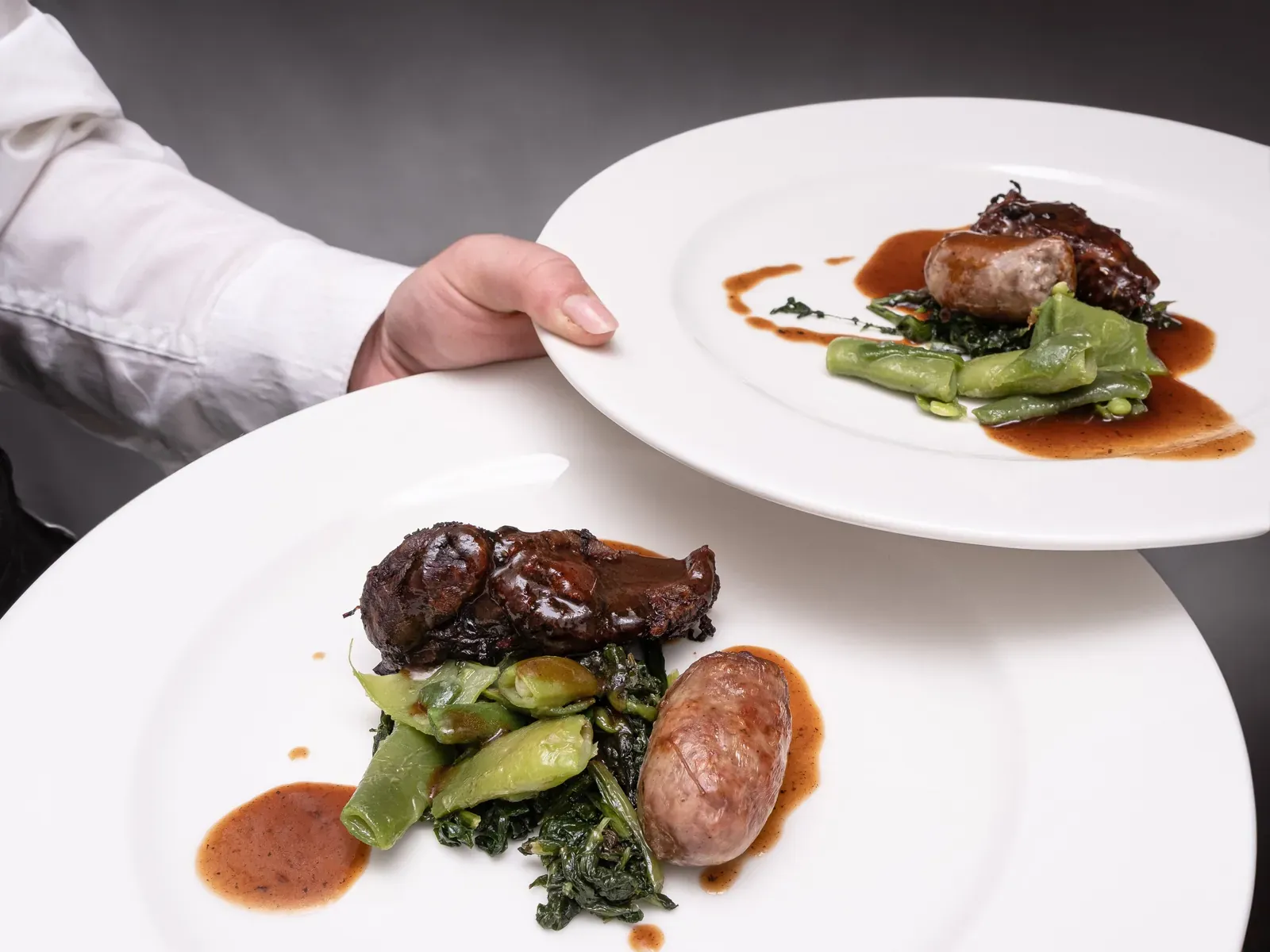
The plate arrives, and the server mentions that the kitchen "just took the walnuts off." For a guest with a severe tree-nut allergy, that dish is the problem rather than the fix, and the real fix happens long before anyone sits down. Tell the kitchen early, in writing and by name. Ask exactly how it prevents cross-contact: separate prep, separate equipment, and who plates and delivers the meal. Serve the person a plated, labeled meal delivered separately instead of sending them to the buffet. And agree, with the attendee, who on site knows about the allergy and what the emergency plan is, built on the attendee's own plan. The rest of this guide covers the questions behind each of those steps, whether you are ordering a Manhattan team lunch from an outside caterer or taking the leadership team to a Catskills house with a hired private chef.
This is operational planning guidance, not medical advice. The attendee's own allergy plan and their doctor come first, and only the kitchen can tell you what it is able to do.
Start with the attendee, privately
The most useful planning conversation is a short, private one with the person who has the allergy. You do not need a diagnosis, and should not ask for one. You need to know what they cannot eat, whether traces and shared equipment matter, and who they are comfortable having told.
Planners feel the weight of not knowing. One poster on r/ExecutiveAssistants, who was organizing lunch for visiting consultants, asked: "How do you guys provide catered lunches when anyone can be allergic to anything without you knowing?" In the same post they describe a visiting consultant who had not mentioned an allergy beforehand, then found shrimp in an unlabeled side dish, said they were allergic and could not eat it. The label the planner had added named only the main dish. A label is only as complete as the information behind it, which is why the plan starts with asking everyone who will eat, visiting guests included, before the order goes in.
If you have not yet collected dietary needs from the whole group, our dietary and allergy workflow guide covers the survey, the kitchen handoff and day-of labels. This guide covers what a severe allergy needs beyond the general dietary list.
A message you can send the attendee
Once someone flags a severe allergy, follow up privately and promptly, by email or direct message:
Thanks for letting us know about your allergy. I want to make sure the kitchen gets it right, so here are a few questions. Answer as much or as little as you like, and I will share only what you agree to, with the people who need it.
- Which foods do you need to avoid, and do traces or shared equipment matter to you?
- Has anything worked especially well, or gone wrong, at past work events or restaurants?
- Would you prefer a plated meal made for you at each meal, or to use the buffet with the kitchen's help?
- Would you like to speak to the chef or caterer directly, or would you rather I relay the questions?
- Who would you like to know: the kitchen, our on-site lead, your manager, anyone else?
- Is there anything from your own allergy plan you would like our on-site lead to know, such as whether you carry medication and where you keep it?
Ask once, well, and spare the attendee from repeating it to everyone else involved.
Who knows what
A severe allergy is health information, so treat the details as need-to-know. The table below is a starting point; the attendee's preferences override it.
| Person | What they need to know | What they do not need |
|---|---|---|
| Kitchen lead or chef | Name or seat marker, the allergen, whether traces and shared equipment matter, which meals | Medical history or anything beyond the food |
| Servers at that meal | Which seat receives the separately delivered plate, and to ask the kitchen rather than guess | The attendee's reasons or history |
| Your on-site lead and a backup | Who has the allergy, which meals, the kitchen contact for each, and anything from the attendee's plan they have chosen to share | Details the attendee has not agreed to share |
| Drivers and activity hosts | That any food on board or at the activity must come from the agreed list, and whom to call with questions | The attendee's name, unless the attendee agrees |
| The attendee's manager | Only what the attendee chooses to tell them | Everything else |
| The rest of the group | Nothing, by default | Anything the attendee has not chosen to share |
Keep the details out of shared channels and printed run-of-shows, ask People Ops how emergency contact details should be held, and tidy up working copies afterward.
The major allergens, and why "major" isn't "only"
The federal list is the place to start. The FDA names nine major food allergens: milk, eggs, fish, crustacean shellfish, tree nuts, peanuts, wheat, soybeans and sesame. Sesame is the newest; under the FASTER Act, "As of January 1, 2023, sesame must be labeled as an allergen on packaged foods and dietary supplements" (FDA).
The list is a floor, not a ceiling. Food Allergy Research & Education (FARE) notes on its kitchen poster that, beyond the top nine, "over 170 foods have caused food allergy reactions" (FARE, "Prevent Cross-Contact" poster). If the attendee's allergen is not one of the nine, spell it out to the kitchen in plain words and ask for full ingredient lists rather than relying on a "Contains" line.
Cross-contact, in plain language
Cross-contact is what turns a dish made without an allergen into one that can still cause a reaction. FARE explains that it "happens when one food comes into contact with another food and their proteins mix," and warns that "Even a trace of food on a spoon or spatula that is invisible to us can cause an allergic reaction" (FARE, "Avoiding Cross-Contact"). Heat does not solve it: "Cooking does not reduce or eliminate the chances of a person with a food allergy having a reaction to the food eaten." Nor does a quick wipe; FARE says equipment and surfaces need washing with soap and water.
The AAAAI's guidance on event planning lists the kitchen shortcuts that cause trouble, starting with "Picking nuts off a salad thinking it will be safe." The others are believing the heat of fryer oil destroys allergens, stirring a milk-free soup with the spoon used for a cream soup, chopping nuts and salad on the same block, and sharing mixers and pans across dishes (AAAAI). It also names the underlying risk plainly: "A lack of communication coupled with false confidence is a dangerous combination."
That is why the walnut plate in the opening is not a near miss. FARE's poster for kitchen staff is direct about it: "If a mistake is made, you must start over and remake the allergy-friendly meal." The honest framing for everyone involved is that a shared kitchen cannot guarantee no cross-contact. What you are looking for is a kitchen with a clear process, and the candor to tell you where that process stops.
What to ask the kitchen
Ask for a process, not reassurance. "We'll be careful" is a kind intention, not an answer. Send the questions in writing to whoever is actually cooking each meal, and ask for written answers.
Two answers deserve particular attention. On shared equipment, FARE's own question list asks whether the grill or fryer is shared, and says that if it is, "the restaurant does not understand food allergies." On staff, the AAAAI says all catering staff, front and back of house and management, "must have protocols for dealing with food allergy, as well as thorough training," and that the training should cover how to deal promptly with allergic and other medical emergencies. You are listening for whether the kitchen has thought about this before you asked.
Kitchen questions (copy into your email)
Replace [name] with the attendee's name or seat marker, as agreed with them.
- Separate prep: Is there a separate area where [name]'s meals can be prepared, and will it be cleaned with soap and water first?
- Equipment: Will separate, freshly washed cutting boards, knives, pans and utensils be used for [name]'s meals?
- Grill and fryer: Is the grill or fryer shared with other foods? If so, how will [name]'s meal be cooked instead?
- Ingredients: Can you send the full ingredient list for every dish [name] may eat, including sauces, dressings, stocks, marinades, garnishes and bread?
- Bought-in items: Which items arrive ready-made, such as bread, desserts or sauces, and will you check their labels for [name]'s allergen?
- Who cooks and plates: Who will prepare and plate [name]'s meal, and how will it be labeled and covered?
- Delivery: Can the plate be delivered separately, by the chef or a manager, at the same time as everyone else's?
- Briefing: Who on your team will be briefed, including front of house, and who is our contact at each meal?
- Training: What is your process for food allergies, and how are staff trained in it?
- Mistakes: If something goes wrong during preparation, will the dish be started again from scratch?
- Changes on the day: If an ingredient or a bought-in product is swapped at short notice, will you tell us before [name]'s meal is served?
- Emergencies: If a guest has an allergic reaction during service, what is your team's process, and who on your side would help get emergency responders to the room?
- Limits: Is there anything on this list you cannot do? We would rather know now and plan around it.
- Deadline: How much notice do you need for this, and for any changes before the event?
The last two questions matter most. A kitchen that says plainly what it cannot do gives you something to plan around, and its own deadline is the one to work to; do not assume one kitchen's notice period applies to the next.
Who is cooking changes everything
The same questions land differently depending on who is cooking, and on a multi-day offsite that can change from breakfast to dinner. Confirm the dining model meal by meal, then add the questions that fit each kitchen. Our guide to private chef vs on-site restaurant for a company retreat covers how to choose a model; this table covers what each one means for a severe allergy.
| Who is cooking | Where cross-contact can creep in | Questions to add | Who should plate and deliver |
|---|---|---|---|
| House restaurant or hotel dining room | A shared line also cooking for other guests during service | Is there a private room or set sitting? Can one named cook prepare the plate? Can the set menu change for one person? | The chef or a manager, to a named seat |
| Hotel or venue banquet kitchen | Large batches prepped ahead, and many hands between kitchen and table | Will the allergy meal appear on the banquet event order (BEO) for every meal, with the name or seat? Who is the banquet captain on the day? | The banquet captain or kitchen lead, to a named seat |
| Hired private chef in a rental house | A home kitchen with pans, boards and a toaster of unknown history, plus a shared fridge | Will you bring your own equipment, or clean the house's first? Will you prepare [name]'s meal first, then keep it covered and apart? Who serves while you cook? | The chef, plate by plate |
| Outside caterer (office lunch, board day) | Prep off site, transport, then setup by your team or the caterer's staff | Will the named meal be packed, sealed and labeled separately? Who unpacks and sets out the food on site? | Your on-site lead hands the sealed meal to the attendee |
| Restaurant in town (team dinner) | The restaurant's line during a busy service, and a set group menu | Can the group menu be adjusted for one person? Can the order be placed in advance? Will the chef or a manager bring the plate? | The chef or a manager |
Take the two examples from the opening. For a Manhattan team lunch from an outside caterer, you will never see the kitchen, so the questions shift to packing and handover: a sealed, named box, set apart from the trays and handed over by a person. For a Catskills house with a hired private chef, confirm that the property allows outside chefs and that the group has the kitchen to itself, then ask the chef about equipment.
For recurring catered lunches, set the process up once, in writing, and recheck it whenever the caterer, the menu or the person ordering changes.
Plated, not buffet, for the person with the allergy
For a severe allergy, the clearest default is a plated meal, made for that person, labeled with their name or seat marker, covered, and delivered separately. FARE's questions for chefs ask how the meal will be labeled and delivered, and answer: "It should be delivered separately, preferably by the chef or manager."
Buffets are harder because the risk sits outside the kitchen. FARE points out that "Ladles and tongs used for serving soups and salad ingredients can be inadvertently placed back with the wrong food," and family-style platters passed around a table share the same weakness. If the attendee wants to use a buffet, agree options with the kitchen rather than assuming them: separate utensils that stay with each dish, labels on every dish, and the attendee served first or plated from the kitchen before the line opens.
Plan the seat as well as the plate. Know where the attendee sits at each meal, so the server knows exactly where the separate plate goes, and ask for it to arrive with everyone else's. At receptions, ask whether the kitchen can prepare a separate plate instead of relying on passed canapés.
The same care applies to food that never passes through the kitchen you briefed: coffee-break pastries, welcome bags and room drops, bar snacks and cocktail garnishes, a cooking class or tasting, snacks colleagues bring to a rental house, and the birthday cake someone orders as a surprise. Each one is another kitchen or another label. Send the relevant details to whoever supplies it, choose packaged items with labels intact, and agree with the attendee how unplanned food gets checked before it is shared.
Labels and menus
Labels support the plan; they do not replace it. The label that matters most is the one on the attendee's own plate or box: their name or seat marker, the dish, and what it was made without, written by the kitchen. On shared dishes, "made without tree nuts" is more honest than a broad promise, with "prepared in a shared kitchen" added when true.
In New York State, the menu itself carries a reminder. The New York State Department of Health says "All menus, including those offered online, must include one of the following": a statement such as "If you have a food allergy or intolerance, please notify us," allergen information for each item, or a note that allergen information is available (NYS DOH). That applies to food service establishments in New York State, and the notice is a prompt, not a plan: the kitchen still needs your names and needs well before the meal.
The day-of plan
Name an on-site lead, and a backup for the hours the lead is running a session, who knows, with the attendee's consent, who has the allergy, which meals it affects, the kitchen contact for each meal, where the attendee keeps their medication if they have chosen to share that, the venue's full address and the nearest emergency care.
Briefings do not always survive a shift change. On a multi-day offsite, the breakfast crew, the banquet captain at dinner and the servers at a restaurant in town may not be the people the kitchen briefed, and a private chef may bring help or a stand-in on some days. Before each meal, the on-site lead checks in with that meal's kitchen contact and confirms the named plate before service starts. The AAAAI also asks guests with allergies to alert the server and manager when they arrive at the function, so tell the attendee who the contact is at each meal in case they would like to do that themselves.
The attendee's own plan comes first
FARE describes its Food Allergy & Anaphylaxis Emergency Care Plan as a document that "outlines recommended treatment in case of an allergic reaction, is signed by a physician and includes emergency contact information," and advises: "Keep your plan in a place where others can find it, and make sure you and others understand what to do in case of an emergency" (FARE, "Food Allergy & Anaphylaxis Emergency Care Plan").
Your job is not to write or interpret that plan; it is to ask what the attendee would like the on-site lead to know, and make sure they know it. FARE also notes that "Epinephrine is the only medication that can reverse the symptoms of anaphylaxis" (FARE, "Recognizing and Treating Reaction Symptoms"), which is why it is worth asking whether the attendee carries an auto-injector and where it will be during the event. Anything medical beyond that is for the attendee and their doctor. Think ahead to moments when bags get left behind, such as a spa session or a boat trip, and ask the attendee how they want to handle those.
A day-of card for the on-site lead
Keep this on one page, held only by the on-site lead and the backup.
| Item | What to write down |
|---|---|
| Attendee and seat | Name, and seat or table at each meal |
| Allergen | In plain words, and whether traces and shared equipment matter |
| Meals and kitchens | Each meal, who is cooking it, and the named contact for that kitchen |
| The attendee's plan | Only what the attendee has chosen to share, such as whether they carry medication and where it is kept |
| Emergency contact | As agreed with the attendee and held in line with People Ops guidance |
| Venue address | The full street address emergency services would use, plus gate codes or entrance directions |
| Nearest emergency care | The nearest emergency department, checked in advance, so whoever goes with the attendee or follows on knows where they are headed |
| Roles | Who calls 911, who tells the venue's front desk, security or host, who meets responders at the entrance and brings them to the attendee, who goes with the attendee, and who keeps the event running |
Remote venues and emergency services
Distance changes the plan. Ask the host or venue of a Catskills or Hudson Valley house for the address emergency services should use, since a listing name is not an address, and how responders find the right driveway after dark. Find out where the nearest emergency department is and how long the drive takes from the venue, rather than assuming. Check whether phones get a signal in the dining room and meeting spaces, and where the nearest working phone is if they do not. Agree in advance who would wait at the road to meet an ambulance.
Travel days
No single kitchen owns a travel day. Ask the attendee what they would like arranged: time to buy food they know, a sealed and labeled meal packed by the kitchen, or nothing at all. Shuttle snacks should come sealed, with labels intact, and the on-site lead should know which vehicle or flight the attendee is on. Flights are the attendee's own arrangement unless they ask for help. If they arrive late, hold their named plate rather than replacing it.
The day before
Re-send the named allergy details to every kitchen and to the on-site lead, ask each kitchen to confirm in writing, and check that the details appear on every BEO or order confirmation. That reconfirmation is one of the checks in our company offsite day-before runbook.
When the attendee brings their own food
Some people with severe allergies prefer to bring their own food, and that is a reasonable choice. AAAAI's event-planning guidance lists alternatives that should be made available, "including outside, packaged food items or a simply prepared meal arranged prior to the event."
Make it easy and make it normal. Check whether the venue allows outside food, tell the kitchen it is coming, and ask for fridge space and somewhere to heat it. At the meal, have it plated on the same dishes and served at the same time as everyone else's. Nobody should have to explain their plate at the table. For recurring office lunches, let the attendee order from a place they trust, on the same basis as everyone else.
Where a local event designer helps
You can run all of this yourself. The hard part is knowing the kitchens before you commit: which Catskills houses allow outside chefs, which banquet teams put special meals on every BEO, and which Manhattan caterers will pack and seal a named meal.
That is local knowledge, and it is what Vantly is built around. Every event is tailor-made: a local event designer who knows the destination shapes the plan around your team. A designer can help you choose a dining model whose kitchen can describe a clear cross-contact process, and can ask the kitchen or chef the questions with you so the answers come back in writing. A designer cannot change what a shared kitchen is able to do, but can help you find out early. Our intent is one vendor, one PO for the event, rather than separate bills for the venue, the kitchens and the transport.
See sample events to get a feel for how designers put a retreat together. They are examples a designer tailors to your group, not fixed packages.
Frequently asked questions
How do you plan a work event around a severe food allergy?
Start with a private conversation with the attendee about what they need and who may know. Then ask the kitchen, in writing, how it prevents cross-contact, serve a plated, labeled meal delivered separately, and name an on-site lead who knows the attendee's own emergency plan, the venue address and the nearest emergency care.
What should I ask a caterer about severe allergies?
Ask whether there is a separate prep area and equipment, whether the grill or fryer is shared, and for full ingredient lists, including sauces, garnishes and bought-in items. Ask who prepares, plates and delivers the meal, how staff are briefed and trained, and what the kitchen cannot do. Get every answer in writing.
What is cross-contact in food allergies?
Cross-contact is when an allergen is accidentally transferred from one food to another, through shared knives, boards, pans, fryer oil, serving spoons or hands. The amounts can be too small to see, and cooking does not remove the risk. Picking an allergen off a finished dish does not undo it; the dish has to be made again.
Is a buffet safe for someone with a nut allergy?
Nobody can promise that, and a shared buffet carries real cross-contact risk from serving spoons that move between dishes. For a severe nut allergy, ask the kitchen for a separate plated meal, made without nuts, labeled and delivered separately. If the attendee also wants to use the buffet, agree options with the kitchen, such as serving them first.
Who needs to know about an attendee's food allergy?
Only the people who need it, agreed with the attendee: the kitchen lead, the servers at that meal, your on-site lead and a backup. Drivers and activity hosts may need the food details without the name. Managers and colleagues know only what the attendee chooses to share. Keep the details out of shared channels and group chats.
What are the nine major food allergens?
The nine major food allergens in the US are milk, eggs, fish, crustacean shellfish, tree nuts, peanuts, wheat, soybeans and sesame. Sesame became the ninth under the FASTER Act, with packaged-food labeling from January 1, 2023. Other foods can cause serious reactions too, so plan around the attendee's own list, not just the nine.
Can an attendee bring their own food to a catered event?
Usually, yes, and it is a reasonable choice. Check the venue's policy on outside food first, then tell the kitchen so staff can store it, heat it if needed, and plate it on the same dishes at the same time as everyone else's. Keep it routine, and never make the attendee explain it at the table.
Planning around a severe allergy?
Tell us your dates, your group and any severe allergies you already know about. A local event designer who knows the destination aims to come back with a tailored plan, which can cover who is cooking each meal and how the kitchen questions get asked. Get a custom quote.
Related guides
- Dietary and allergy workflow for company offsites: survey, kitchen, labels
- Private chef vs on-site restaurant for a company retreat
- Company offsite day-before runbook
- Planning an inclusive company retreat
- Group transport for company offsites
- How to brief a local event designer
- What to ask in a custom event quote
- Team retreats with Vantly
- Offsite planning for People Ops
- Event planning for executive assistants
- All Vantly guides
Sources
- U.S. Food and Drug Administration, The FASTER Act: Sesame Is the Ninth Major Food Allergen: the nine major food allergens and the January 1, 2023 sesame labeling date.
- American Academy of Allergy, Asthma & Immunology (AAAAI), Event Planning and Food Allergy Awareness: kitchen shortcuts that cause cross-contact, staff protocols and training, and alternatives for guests with allergies.
- Food Allergy Research & Education (FARE), Avoiding Cross-Contact: what cross-contact is, cleaning, and questions to ask a chef or manager.
- Food Allergy Research & Education (FARE), Prevent Cross-Contact (kitchen poster, PDF): kitchen practices, remaking a meal after a mistake, and foods beyond the top nine.
- Food Allergy Research & Education (FARE), Food Allergy & Anaphylaxis Emergency Care Plan: what a personal emergency care plan contains.
- Food Allergy Research & Education (FARE), Recognizing and Treating Reaction Symptoms: the role of epinephrine in anaphylaxis.
- New York State Department of Health, Food Service Establishment Signage & Information: the allergy notice required on menus in New York State.
- r/ExecutiveAssistants, Providing Catered Lunches and Food Allergies: a planner's question about feeding guests with unknown allergies.