
Team building activities for small groups: 24 ideas for 5 to 15 people in 30, 60 or 120 minutes
Small groups can do things big groups cannot: one table, one conversation, and everyone plays. Pick by the time you have, check the cost per head, and plan the split before you book.
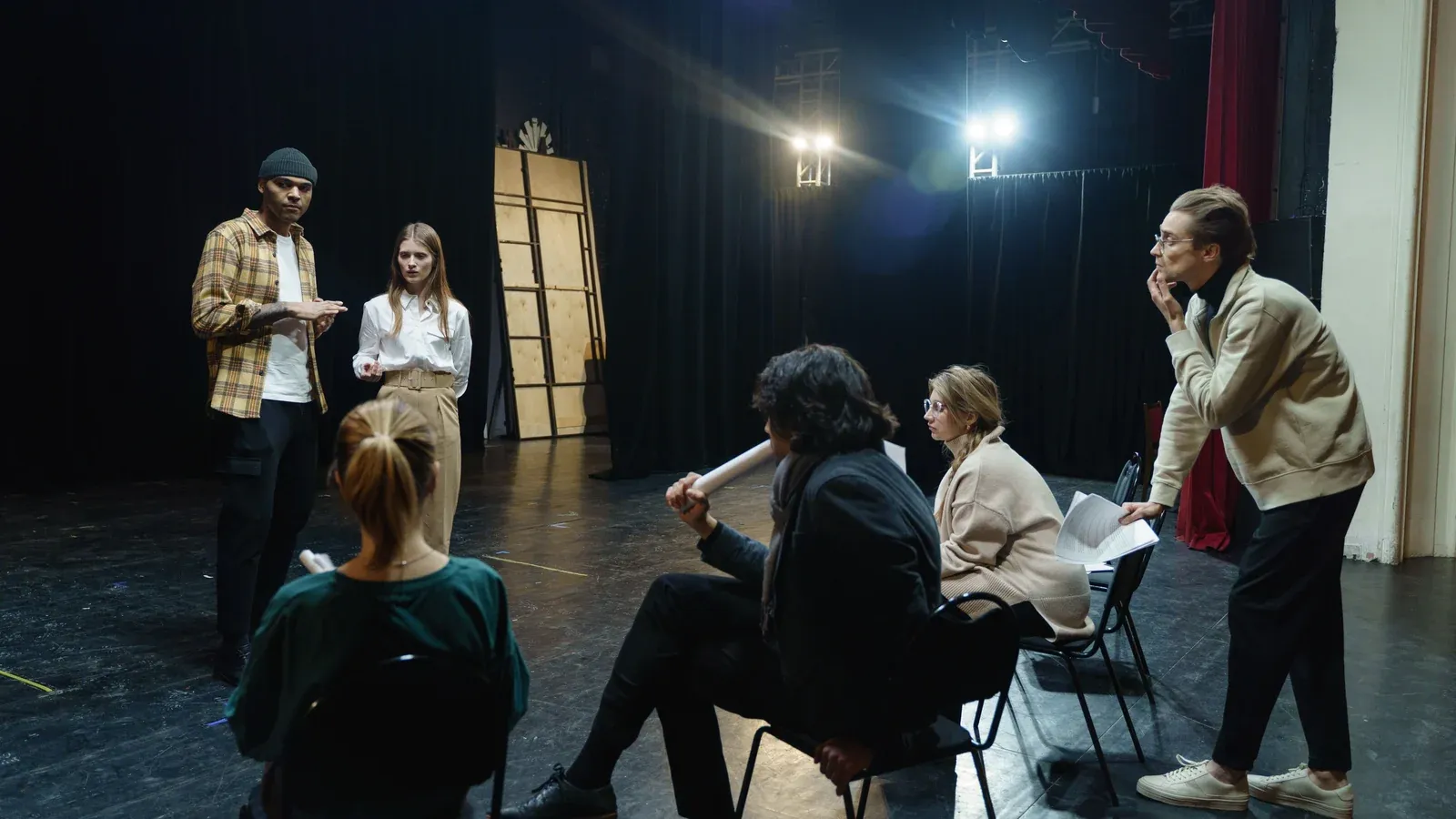
The best team building activities for small groups use what a group of five to fifteen has that a big group does not: one table, one conversation, and a part for everyone. Pick by the time you have (30, 60 or 120 minutes), check the cost per head, because small groups often run into a host's minimum fee, and plan how to split the group before you start. Every idea comes with an opt-out role.
Team building activities for small groups of adults at work suit a meeting slot, an afternoon block or a team session, not a party. If you need short team building activities for work that a small group can run between meetings, start with the format cards. Costs and availability vary by city and host, so confirm before you book. For a whole retreat rather than a single session, see corporate retreats.
How to choose a small-group activity in three questions
- How much time do you have? Thirty minutes fits inside a meeting or at the end of a day. Sixty minutes is an afternoon block. A 120-minute session is usually a team session with a host or a booking.
- How many people, exactly? With five to seven, keep one group and let everyone play. With eight to ten, run one group or two teams. With eleven to fifteen, run two or three teams. For an odd number, give the extra person a rotating role, such as timekeeper, judge or host, rather than a seat on the side.
- What can you spend per head? Many hosted sessions are priced per group or carry a group minimum, so for six people the cost per head can be higher than for fifteen. Ask for the group minimum before you compare options.
Team building activities for small groups: the format cards
Each card gives the size it suits best, how to split the group, where it runs, who runs it, a cost band and the opt-out role. The cost bands, in plain words: Lower means materials only or nothing to buy, run by your own team. Mid means a kit, a room or a short hosted session. Higher means a host plus a space, food or travel. "Minimum fee likely" marks formats where a host usually charges per group.
30-minute formats
These are full 30-minute activities with a result at the end, run by your own team in a meeting room or on video.
- Survival ranking exercise. Each person ranks a list of items for a stranded-group scenario alone, then the group agrees one ranking and compares the two. Best at: 5 to 7, 8 to 10 · Split: one group; with 11 or more, two teams that compare rankings at the end · Where: meeting room or video · Who runs it: self-run, with a printed scenario · Cost per head: Lower · Opt-out role: the recorder, who writes up the agreed list and keeps time.
- Workflow map. The group maps one real process on sticky notes, step by step, and marks the handoff everyone agrees is slowest. Best at: 5 to 7, 8 to 10 · Split: one group at one wall; with 11 or more, two groups each map half of the process · Where: meeting room with wall space, or a shared whiteboard on video · Who runs it: self-run, led by a colleague who does not own the process · Cost per head: Lower · Opt-out role: the scribe, who moves the notes.
- Label redesign challenge. Pairs redesign the label of an everyday product on paper so a new customer would understand it at a glance, then the group picks a favorite. Best at: 5 to 7, 8 to 10, 11 to 15 · Split: pairs, with one trio for an odd number · Where: meeting room · Who runs it: self-run, with paper and markers · Cost per head: Lower · Opt-out role: the judge.
- Plain-English rewrite. Pairs rewrite a dense paragraph, such as a policy or a product help page, in plain words, and the group combines the best lines. Best at: 5 to 7, 8 to 10 · Split: pairs, with one trio for an odd number · Where: meeting room or video · Who runs it: self-run · Cost per head: Lower · Opt-out role: the editor, who merges the final version.
- Six-word project review. Each person writes six words about a recent project on a card, the group sorts the cards into themes, and picks one thing to keep doing. Best at: 5 to 7, 8 to 10, 11 to 15 · Split: one group · Where: meeting room or video · Who runs it: self-run · Cost per head: Lower · Opt-out role: the sorter; cards can stay unsigned.
- Tangram puzzle race. Teams solve a set of tangram silhouettes with one set of pieces, passing the pieces to a new person each round. Best at: 8 to 10, 11 to 15 · Split: two or three teams of 4 or 5 · Where: meeting room · Who runs it: self-run, with printed or bought sets · Cost per head: Lower · Opt-out role: the referee, who checks each solution.
- Future headline. Teams write the headline and a three-line story they would like to see about the team's work a year from now. Best at: 5 to 7, 8 to 10, 11 to 15 · Split: two teams; mix departments or tenure · Where: meeting room or video · Who runs it: self-run · Cost per head: Lower · Opt-out role: the judge, who picks the line worth keeping.
- Cipher puzzle sheet. Teams decode a short message written in three ciphers of rising difficulty, prepared by one organizer. Best at: 5 to 7, 8 to 10 · Split: pairs or two teams · Where: meeting room or video · Who runs it: self-run, with some prep time to write the sheet · Cost per head: Lower · Opt-out role: the hint keeper.
60-minute formats: fun team building activities for small groups
Fun team building activities for small groups often fit an hour: long enough to build something, short enough to keep an afternoon intact.
- Tabletop escape box. A boxed puzzle game where the group works through locked clues on one table against the clock. Best at: 5 to 7, 8 to 10 · Split: one box for a group of 6; with 12, two boxes running at once and a shared finish time · Where: meeting room · Who runs it: self-run with a bought kit, or hosted · Cost per head: Lower to mid · Opt-out role: the clue keeper, who holds the hints.
- Skill swap. Each person teaches one practical skill in about five minutes, such as a spreadsheet shortcut, a knot or a kitchen tip. Best at: 5 to 7, 8 to 10 · Split: one group; with 11 or more, two rooms running at once · Where: meeting room or video · Who runs it: self-run · Cost per head: Lower · Opt-out role: share a written tip on a card instead of teaching it.
- Build-a-crossword. Teams build a small crossword from words the team uses every day, then swap and solve the other team's grid. Best at: 8 to 10, 11 to 15 · Split: two teams · Where: meeting room · Who runs it: self-run, with grid paper · Cost per head: Lower · Opt-out role: the checker, who confirms each grid works.
- What-is-it object table. The organizer sets out a few unusual old tools or gadgets, and teams work out what each one was for before the answers are revealed. Best at: 5 to 7, 8 to 10, 11 to 15 · Split: two teams; with an odd number, add a rotating answer keeper · Where: meeting room · Who runs it: self-run, with objects borrowed or sourced ahead, nothing sharp or fragile, and an answer card for each · Cost per head: Lower · Opt-out role: the answer keeper, who holds the cards and reads out each answer.
- Fictional town plan. Teams plan a small fictional town on a large sheet to a set of rules: a budget of points, one river, a park and a train line. Best at: 8 to 10, 11 to 15 · Split: two or three teams · Where: meeting room · Who runs it: self-run, with large paper · Cost per head: Lower · Opt-out role: the inspector, who checks each plan against the rules.
- Design-a-game hour. Teams design a simple card or dice game, then play each other's. Best at: 8 to 10, 11 to 15 · Split: two teams · Where: meeting room or lounge · Who runs it: self-run, with blank cards and dice · Cost per head: Lower · Opt-out role: the rules editor.
- Tree and bird walk with a naturalist. A local naturalist leads a short walk in a nearby park and shows the group how to name a handful of trees and birds. Best at: 5 to 7, 8 to 10, 11 to 15 · Split: one group; above 10, ask whether the naturalist brings a second guide · Where: outside, in a park near the office · Who runs it: hosted · Cost per head: Mid, minimum fee likely · Opt-out role: a bench station with the field guide, where the group stops on the way back. Book the naturalist ahead, and if the National Weather Service (NWS) has a Heat Advisory or an Extreme Heat Warning out, move it indoors with the naturalist's photos and field guides.
- Hosted strategy game lesson. A coach teaches the basics of chess, Go or bridge, and the group plays short games in pairs. Best at: 5 to 7, 8 to 10 · Split: pairs · Where: meeting room or a club's room · Who runs it: hosted · Cost per head: Mid, minimum fee likely · Opt-out role: the record keeper.
120-minute formats
Two hours usually means a host or a booking, and a cost band of mid to higher. To turn one of these into a full day with other blocks around it, see our guide to a team building day.
- Cooking class. A chef teaches the group to cook one meal together, and everyone eats it at one table. Best at: 5 to 7, 8 to 10, 11 to 15 · Split: one station for 6; two stations for 12, each cooking half the menu · Where: cooking school, or an office kitchen the chef has checked for burners, sinks and building rules · Who runs it: hosted · Cost per head: Higher, minimum fee likely · Opt-out role: plating and table setting. No alcohol by default.
- Maker workshop with a local maker. Pottery, printmaking, woodworking or bookbinding in a studio, with something to take home; fired pottery is usually collected or shipped later, so ask the studio. Best at: 5 to 7, 8 to 10 · Split: one table; above 10, ask for a second helper · Where: a maker's studio · Who runs it: hosted · Cost per head: Mid to higher, minimum fee likely · Opt-out role: seated, no skill needed, and nothing is shown unless the person wants.
- Flower-arranging workshop with a florist. A florist brings stems and shows the group how to build one arrangement each. Best at: 5 to 7, 8 to 10, 11 to 15 · Split: one long table · Where: a studio or the office · Who runs it: hosted · Cost per head: Mid to higher, minimum fee likely · Opt-out role: drop in and make a simpler jar of stems.
- Backstage theater tour with a stage manager. A stage manager shows the group how a working theater runs a show, then each person can call one light or sound cue from the booth, where the theater allows it. Best at: 5 to 7, 8 to 10, 11 to 15 · Split: one group, or two groups that swap between the stage and the booth · Where: a working theater · Who runs it: hosted · Cost per head: Mid to higher, minimum fee likely · Opt-out role: a seat in the house, following along on the printed cue sheet. Book group entry ahead, because tours fit around the theater's rehearsal and show schedule, and ask about steps and access backstage.
- Guided neighborhood walk with a food stop. A local guide leads a short route with one stop to eat together. Best at: 5 to 7, 8 to 10, 11 to 15 · Split: one group · Where: outside · Who runs it: hosted · Cost per head: Mid, minimum fee likely · Opt-out role: take the shorter route or meet the group at the food stop.
- Sign language basics with a Deaf instructor. A Deaf instructor teaches everyday American Sign Language signs for greetings, names and work phrases, and the group practices in pairs. Best at: 5 to 7, 8 to 10, 11 to 15 · Split: one group for teaching; pairs for practice, with one trio for an odd number · Where: meeting room · Who runs it: hosted · Cost per head: Mid, minimum fee likely · Opt-out role: practice seated from a printed sign sheet, without being called on. Book the instructor ahead.
- Bocce or shuffleboard lane booking. An indoor lane venue with a host who runs a short tournament. Best at: 8 to 10, 11 to 15 · Split: teams of 3 or 4 that rotate between lanes · Where: an indoor lane venue · Who runs it: booked, with a venue host · Cost per head: Mid, minimum fee likely · Opt-out role: the scorekeeper. Ask for non-alcoholic options first, and ask whether the booking carries a food and drink minimum.
- Gallery tour with a sketching stop. A guide leads a short tour of one gallery, then the group sketches with simple kit. Best at: 5 to 7, 8 to 10 · Split: one group · Where: a gallery · Who runs it: hosted · Cost per head: Mid, minimum fee likely · Opt-out role: write notes instead of drawing. Check which sketching materials the gallery allows; pencils are the usual safe choice.
How to read the cards. Start with the time box, then check the size line and the split. Use the cost band to compare, and ask any host for the group minimum before you decide. Bands are rounded, and minimums and prices vary by city and host.
Every card passes the same opt-out check: no physical contact, no personal disclosure, no performance, no fitness bar and no alcohol by default, or it names its adaptation. For the wider approach to optional sessions, see inclusive retreat planning for People Ops. For the cooking class and the food walk, collect allergies ahead: the FDA lists nine major food allergens (milk, eggs, fish, crustacean shellfish, tree nuts, peanuts, wheat, soybeans and sesame). Our dietary and allergy workflow covers how to ask.
Indoor team building activities for small groups
Most of the cards are indoor team building activities for small groups. Most of the 30-minute and 60-minute formats run in a meeting room, the cooking class needs an office kitchen or a cooking school, and the maker and flower workshops need a rented studio or a room with protected tables. What the room needs: a table everyone fits around, a screen for anything on video, and a sink for anything messy. In an open-plan office, book a closed room, because puzzles and games get loud. Ask about access needs privately before you choose the room, and use our venue accessibility checklist for any space outside the office. The Americans with Disabilities Act is a federal civil rights law that prohibits discrimination against people with disabilities, so treat access as part of the plan; this is planning guidance, not legal advice.
Team building activities for small teams: how to split the group
Team building activities for small teams go well when the split is planned ahead. Mix departments and tenure, and keep the same manager out of every group, so people end up working with someone new.
| People | Split | Odd-number fix |
|---|---|---|
| 5 | One group, or a pair and a trio for pair work | Give the fifth person a rotating judge role |
| 6 | One group, three pairs or two teams of 3 | None needed |
| 7 | One group | Add a rotating timekeeper or host |
| 8 | One group or two teams of 4 | None needed |
| 9 | One group or three teams of 3 | Three teams instead of two |
| 10 | Two teams of 5 | None needed |
| 11 | Two teams of 5 plus a rotating judge | Or teams of 5 and 6 with an extra task for the smaller team |
| 12 | Two teams of 6 or three teams of 4 | None needed |
| 13 | Three teams of 4 plus a rotating judge | Or teams of 4, 4 and 5 |
| 14 | Two teams of 7 or three teams of 5, 5 and 4 | Give the smaller team the first turn |
| 15 | Three teams of 5 | None needed |
These are working rules of thumb from planning practice, not research findings. Larger groups need a different approach, which our guide to team building for large groups covers.
What small-group team building costs per head
Cost per head is shown as three relative bands rather than prices. Lower is materials only or nothing to buy: paper, sticky notes, printed puzzles, a kit you already have. Mid is a bought kit, a booked room or a short hosted session. Higher is a host plus a space, food or travel, such as a cooking class or a studio workshop.
The minimum-fee effect matters most at this size. Many hosted sessions are priced per group or carry a minimum, so a group of six can pay more per head than a group of fifteen for the same session. Ask for the minimum first, then compare. What drives the cost: the host, materials, room hire, food and travel. For what to ask when you compare quotes, see what to ask in a custom event quote.
Virtual small groups
Several cards run on video: the survival ranking exercise, the workflow map on a shared whiteboard, the plain-English rewrite, the six-word project review, the cipher puzzle sheet and the skill swap. For more virtual team building activities for small groups, along with remote and hybrid formats, see our guide to team building activities for work. If part of the group is remote, our guide to hybrid and remote inclusion covers the setup.
Take it outside
For a half-day away from the office, see our company outing ideas. For activities on a retreat, see our company retreat ideas or the corporate retreat planning guide. Outdoor formats are in our guide to outdoor team building activities. In summer, check the forecast: the NWS issues a Heat Advisory for dangerous heat conditions that are not expected to reach warning criteria, and an Extreme Heat Warning when extremely dangerous heat conditions are expected or occurring.
When a local planner helps
Most 30-minute and 60-minute formats are self-run. For the 120-minute formats, or when the team wants something hosted that does not feel like a stock package, a Vantly local planner can find a host or a space that takes a small group, check the minimum, handle food and access needs, and fold it into one priced proposal built from your brief. Vantly matches that brief with a local planner, who produces a turnkey event proposal with prices. We send it within 48 hours, at no cost. Any price still waiting on a vendor's confirmation is marked as an estimate. The plan is tailor-made. Instead of comparing marketplaces, agencies and venue finders, you get one local planner, one fee, and our intent is one vendor, one PO for the event.
You can see sample events as examples a local planner tailors, not fixed packages. If a sample mentions a private room, some venues may offer exclusive use; confirm it in writing. To see who works near you, browse local planners, including planners in New York. A short brief helps; see how to brief a local planner.
Frequently asked questions
What are some fun and engaging activities for adults in a small group setting?
Hands-on, low-pressure formats with a clear result: a tabletop escape box, a build-a-crossword round, a maker workshop or a cooking class. Each one has a role, such as the clue keeper or the judge, for anyone who would rather not play. More fun team building activities for small groups are in the 60-minute cards.
What are some good team bonding activities for a group of 10 people?
With ten people in the office, run two teams of five for puzzles such as the tabletop escape box, the tangram race or the fictional town plan, or keep one group for the workflow map. For a longer session, a cooking class keeps everyone at one table. Rotate roles and mix departments. For outings instead, see our company outing ideas.
What are some 15-minute team building activities?
Quick formats under fifteen minutes are covered in our guide to team building activities for work.
What are some engaging 5-minute team building activities I can do at work?
Five-minute formats for a meeting are in our guide to team building activities for work.
What are some good 10-minute virtual team building activities?
Short video formats, along with remote and hybrid ideas, are in our guide to team building activities for work.
What can a team of five do for team building?
Keep it one group and pick a 60-minute format, such as the tabletop escape box or a skill swap, and rotate roles so everyone has a turn at each. For anything hosted, ask for the group minimum first, because a host's minimum fee can push the cost per head up for five people.
What are indoor team building activities for small groups?
Several 30-minute and 60-minute cards run in a meeting room: the workflow map, the survival ranking exercise, the tangram race, the tabletop escape box and the fictional town plan. Longer options include a cooking class in an office kitchen or a maker workshop in a studio. The room needs a table everyone fits around, and a closed door helps.
How much does small-group team building cost per person?
It depends on the format, so the cards use three bands rather than prices. Self-run formats sit in the lower band, kits and short hosted sessions in the mid band, and a host plus a space or food in the higher band. Small groups often meet a host's minimum fee, so ask for it before comparing. Costs vary by city and host.
What do you do with an odd number of people?
Give the extra person a rotating role, such as judge, timekeeper or host, rather than leaving them out, and switch the role each round so nobody keeps it. With nine or thirteen, three teams can be easier than two.
Related guides
- Team building activities for work
- Company outing ideas
- Team building day
- How to plan a staff retreat
- Corporate retreats planned by a local planner
- Quiet rooms and sensory breaks
- Holiday party games for work
Sources
- U.S. Food and Drug Administration, Food allergies
- National Weather Service, Heat watches, warnings and advisories
- ADA.gov, Introduction to the Americans with Disabilities Act